The End of the World: Ushuaia and the Dream of Patagonia’s Edge
In this article you will find…
A journey to Ushuaia, the last city before Antarctica, where the land ends and imagination begins. You will sail the Beagle Channel, walk through Tierra del Fuego National Park, and watch penguins gather on rocky islands as the wind carries the scent of snow and salt. However, this is not merely a travel guide. It is a meditation on distance, on the quiet that comes when the world falls away, and on the strange joy of standing at the edge of something infinite. Therefore, through this story, you will discover that Ushuaia is not about endings but about the beauty of stillness — a reminder that sometimes the farthest place you can go is the one that brings you closest to yourself.
1. Arrival at the Edge of the Map
The descent into Ushuaia feels almost unreal. The plane dips below clouds to reveal mountains that rise directly from the sea, their peaks dusted with snow even in summer. Below, the city sits cradled between the Andes and the Beagle Channel, a patchwork of roofs painted in blues, reds, and greens. The light is sharp, almost crystalline, and the air tastes of ice and wind. You step out of the airport and feel it immediately — that particular silence that belongs only to remote places. It is not the absence of sound but the presence of space. The city itself is small but full of life. Wooden houses line the slopes, their chimneys sending thin trails of smoke into the sky. Shops sell wool sweaters and postcards that proudly read “Fin del Mundo” — End of the World. Yet despite the souvenir slogan, Ushuaia is no gimmick. It is raw, honest, and alive. Moreover, as you walk along the main street, Avenida San Martín, you notice the rhythm of life is slow but purposeful. Fishermen mend nets on the docks, tourists sip hot chocolate in cafés, and mountaineers in heavy jackets load gear for expeditions to Antarctica. The sound of gulls mixes with the hum of conversation in Spanish, English, and French. The city feels like a meeting point for all who crave the unknown. In addition, the light here changes constantly. One moment the sky glows gold, the next it darkens to steel gray as the wind shifts. Clouds roll in from the mountains and vanish again just as fast. The weather seems to mirror the mood of the place — wild, unpredictable, deeply alive. Eventually, you walk to the waterfront. The water shimmers silver beneath the fading sun, and across the channel, the Chilean mountains rise like blue ghosts. You breathe deeply and realize that this is the end of the world not because there is nothing beyond, but because everything beyond is mystery.
2. Tierra del Fuego: Where Forest Meets Sea
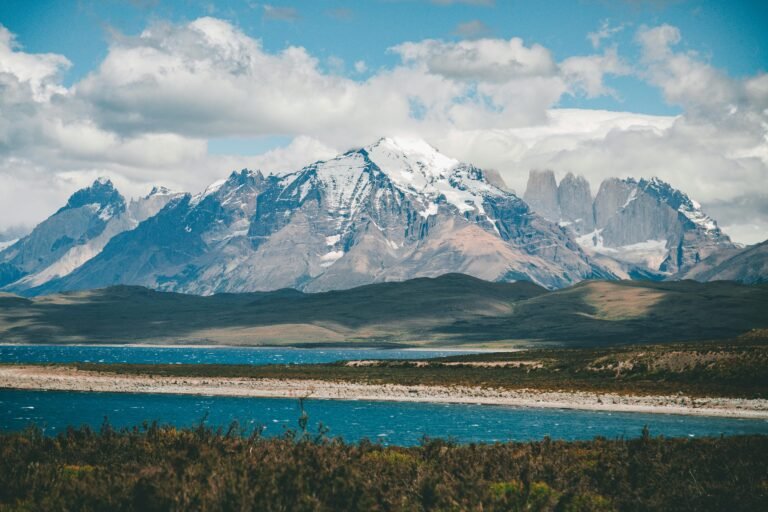
A few kilometers west of the city lies Tierra del Fuego National Park, one of Argentina’s most beautiful and least understood landscapes. The name, “Land of Fire,” was given by early European explorers who saw the flames of Indigenous Yaghan campfires flickering along the coast. Yet the true element that defines this place is water — rivers, lakes, and sea converging under skies that seem endless. The road to the park winds through forests of lenga and ñire trees, their trunks twisted by the wind. The smell of moss and damp earth fills the air, and small foxes dart across the path. You stop often, unable to resist the urge to step into the quiet. Moreover, the park feels almost like a dreamscape, where opposites coexist in perfect harmony. Glaciers hang above green meadows, and delicate orchids bloom beside icy streams. At Bahía Ensenada, a small wooden sign marks the end of Ruta Nacional 3, the southernmost road in the Americas. Beyond this point, there are no highways, no towns, only ocean and the promise of Antarctica. Standing there, you feel both tiny and infinite. The wind cuts through your jacket, but you do not move. You listen to the rustle of trees and the soft rush of waves against the rocks. This is the sound of the world breathing. In addition, hiking trails lead deeper into the park. The Sendero Costera follows the shoreline, curving through forests and opening onto beaches covered in seaweed and shells. The water shifts between green and gray, depending on the light. Occasionally, a sea lion surfaces, its head glistening before it disappears again. You eat lunch sitting on a rock — bread, cheese, and apples — simple, perfect. The taste feels richer for the setting. Eventually, you reach Lago Roca, a lake shared by Argentina and Chile. Its surface reflects the peaks like a mirror, broken only by ripples of wind. The quiet is so complete you can hear your own heartbeat. You realize that this is not a park to be conquered but to be felt. It teaches you how to listen again.
3. The Beagle Channel: Sailing Through Silence
The Beagle Channel is the lifeblood of Ushuaia — a narrow stretch of water that connects the Atlantic and Pacific Oceans, named after the ship that carried Charles Darwin on his voyage. To understand Ushuaia, you must see it from the water. You board a small catamaran in the morning, wrapped in layers against the wind. The air smells of salt and pine, and gulls wheel overhead as the boat glides from the port. The city recedes quickly, replaced by vastness. Mountains rise sharply on both sides, their slopes streaked with snow. The water is a deep, metallic blue, so pure it seems to swallow sound. Moreover, the channel holds life in abundance. Soon, you spot cormorants nesting on rocky islands, their black and white feathers glinting in the sun. Then come the sea lions, lounging lazily on warm rocks, their bodies slick and golden. Their cries echo across the water, wild and familiar all at once. In addition, the captain points toward Les Eclaireurs Lighthouse, standing alone on a small island. Painted red and white, it has become a symbol of the region — a solitary sentinel watching over the end of the world. You take photographs, of course, but the image that stays with you is not in the camera. It is the feeling of the wind on your face, the salt on your lips, the sight of mountains mirrored perfectly in the sea. Later, as the boat turns toward Isla Martillo, you spot the first penguins. They waddle awkwardly along the shore, their movements both comic and endearing. Some dive into the water, cutting through it with grace that seems almost impossible on land. The group falls silent, everyone smiling, enchanted. Eventually, as the sun begins to lower, the return journey feels different. The water gleams silver, and the air carries the faint scent of snow. The captain slows the engine, and for a moment, the boat drifts in perfect stillness. You look around — at the mountains, the sea, the fading light — and realize that there are places that cannot be captured, only remembered in the language of feeling. The Beagle Channel is one of them.
4. The Ghosts of Exploration and Exile
Beyond its beauty, Ushuaia carries a history as complex as the land itself. Founded in the late 19th century as a penal colony, the city grew around its prison, which once held both criminals and political dissidents. The Museo Marítimo y del Presidio, housed in the former prison, preserves this history with unflinching honesty. The corridors are cold and silent, their walls lined with photographs and tools. You walk slowly, the sound of your footsteps echoing. Each cell tells a story — of endurance, madness, and isolation. Yet even here, amid the darkness, there is dignity. The prisoners built much of the early city, carving a life out of wilderness. Their legacy lingers in the architecture, the roads, and the resilient spirit of Ushuaia’s people. Moreover, the museum also celebrates the explorers who braved these waters — Magellan, Darwin, Shackleton — names that conjure both courage and obsession. Their journeys remind you that curiosity has always been stronger than fear. In addition, exhibits dedicated to the Yámana people, the original inhabitants of Tierra del Fuego, offer a glimpse of a world that existed long before maps. They lived naked in this cold land, protected by fires that never went out, traveling the channel in canoes made of bark. Their culture was nearly erased by colonization, but their presence endures in memory and spirit. As you leave the museum, you step into bright sunlight. The mountains stand immutable, the sea glitters, and you sense that history here is not past — it is woven into the wind, into every ripple of water and every shadow of cloud that crosses the peaks. Eventually, you walk back through town, thoughtful, quiet. Ushuaia holds contradictions with grace: beauty and hardship, freedom and confinement, presence and absence. It feels both ancient and new, a city perpetually on the verge of becoming.
5. The Rhythm of Daily Life at the End of the World
After days of exploring, you begin to notice the everyday rhythm that gives Ushuaia its soul. Morning comes early, the light spilling softly over the channel. Fishermen head to the docks, their boots echoing on the wood. The air smells of coffee and seaweed. Locals greet one another with easy warmth; despite the remoteness, there is no sense of loneliness here — only community. Moreover, the food in Ushuaia reflects its geography: hearty, honest, and full of flavor. You sit at Kaupé, a small restaurant overlooking the bay, and order the famous centolla, or king crab. It arrives steaming, bright red against a white plate, its meat tender and sweet. The waiter recommends a glass of Patagonian white wine, crisp and cold, and the pairing feels like perfection. Later, at Ramos Generales, a rustic café filled with old maps and photos, you sip hot chocolate thick enough to eat with a spoon. The wood stove crackles, and travelers trade stories about weather, whales, and plans to reach Antarctica. The world feels small and infinite at once. In addition, evenings in Ushuaia have their own kind of magic. The sky glows late into the night, shifting from gold to lavender before finally yielding to darkness. Locals gather in bars to play music or simply watch the light fade. The sense of camaraderie is palpable — as if everyone here knows they share something rare. Eventually, you walk along the waterfront one last time. The city lights shimmer on the water, and a faint snow begins to fall. The sound of footsteps mixes with the cry of seabirds, and you realize that even in its quietest moments, Ushuaia vibrates with life.
6. The Lesson of the Edge
On your final morning, you drive up to Glaciar Martial, just above the city. The trail climbs steeply through forest before opening onto a view that takes your breath away. Below lies Ushuaia, small and shining beside the channel, and beyond it, the endless expanse of ocean leading south. The wind is cold, fierce, pure. You stand there for a long time, letting it wash over you. Moreover, you realize that reaching the end of the world is not about distance but about presence. It strips away everything unnecessary — noise, hurry, expectation — until only clarity remains. The landscape does not ask you to conquer it; it asks you to surrender, to listen, to belong. In addition, you think about all the people who have come here before: explorers chasing discovery, sailors seeking passage, dreamers escaping or arriving. Ushuaia gathers them all, not as ghosts but as stories that never quite end. Eventually, you descend back to the city, the wind at your back. The plane ticket in your pocket feels irrelevant. Leaving does not mean returning to normal life; it means carrying a new rhythm with you — slower, steadier, truer. When you finally board your flight, you look out the window and see the mountains fading into mist. The water glitters like glass, and the sky seems endless. You smile, knowing that somewhere below, the world is still breathing, wild and beautiful, waiting for the next traveler to listen.