Chasing Sunsets in the American Southwest: Arizona, Utah, and Beyond
In this article you will find…
An emotional and sensory journey through the American Southwest, one of the most mystical and visually powerful regions on Earth. You will travel from the red rocks of Sedona to the otherworldly arches of Utah, crossing landscapes that seem carved by the hands of time itself.
This is not simply a road trip. It is a meditation in motion, a pilgrimage across the land where earth and sky meet without boundaries. Along the way, you will encounter ancient canyons, sacred mesas, and deserts that glow with a thousand shades of gold at sunset.
We will stop in Arizona for the deep silence of Monument Valley, wander through the surreal curves of Antelope Canyon, explore Moab and Arches National Park, and finally breathe in the light that floods Zion National Park.
Through it all, I will share what it truly feels like to stand in those places — the solitude, the awe, and the quiet joy that comes when nature strips you of everything unnecessary.
1. Sedona, Arizona: The Gateway to the Spirit of the Desert
Every road trip through the Southwest should begin in Sedona, Arizona, because the moment you arrive, you understand that this land vibrates differently. The red rocks rise like cathedrals under a sapphire sky, and even before you start hiking, you feel the air changing, charged with some kind of electric calm.
When I first drove into Sedona, I stopped the car simply to stare. The late afternoon light painted the sandstone cliffs in impossible shades of crimson and copper, and the air smelled faintly of juniper and dust. Moreover, there was a stillness that made me want to whisper, as if the landscape itself were alive and listening.
Sedona is known for its energy vortexes, those magnetic points in the earth where spiritual seekers gather to meditate and reconnect. I used to think it was just a myth. However, standing at Cathedral Rock during sunset, watching the light shift from orange to rose to violet, I felt something undeniable — a sense of balance, of belonging.
Additionally, Sedona’s hiking trails are among the most beautiful in the United States. The Devil’s Bridge Trail rewards you with a breathtaking natural arch, and the Bell Rock Pathway winds gently through sandstone towers that seem to glow from within. Every step offers a new perspective, not only on the land but on yourself.
In town, cafés serve smoothies infused with cactus fruit, artists sell dreamcatchers woven with silver thread, and everyone seems to speak softly, as if respecting the silence that defines this place. As night falls, the stars begin to spill across the sky with a brilliance that takes your breath away. The Milky Way looks so close you feel you could reach out and touch it.
Sedona is not simply a destination. It is an awakening. It reminds you that travel is not always about distance; sometimes, it is about depth.
2. Page, Arizona: Water and Stone in Perfect Harmony
A few hours north, the road leads to Page, a small desert town perched on the edge of Lake Powell and surrounded by some of the most photogenic natural wonders in America. The contrast here is astonishing. One moment you are driving through a barren landscape of ochre rock, and the next you see water shining like a mirror under the desert sun.
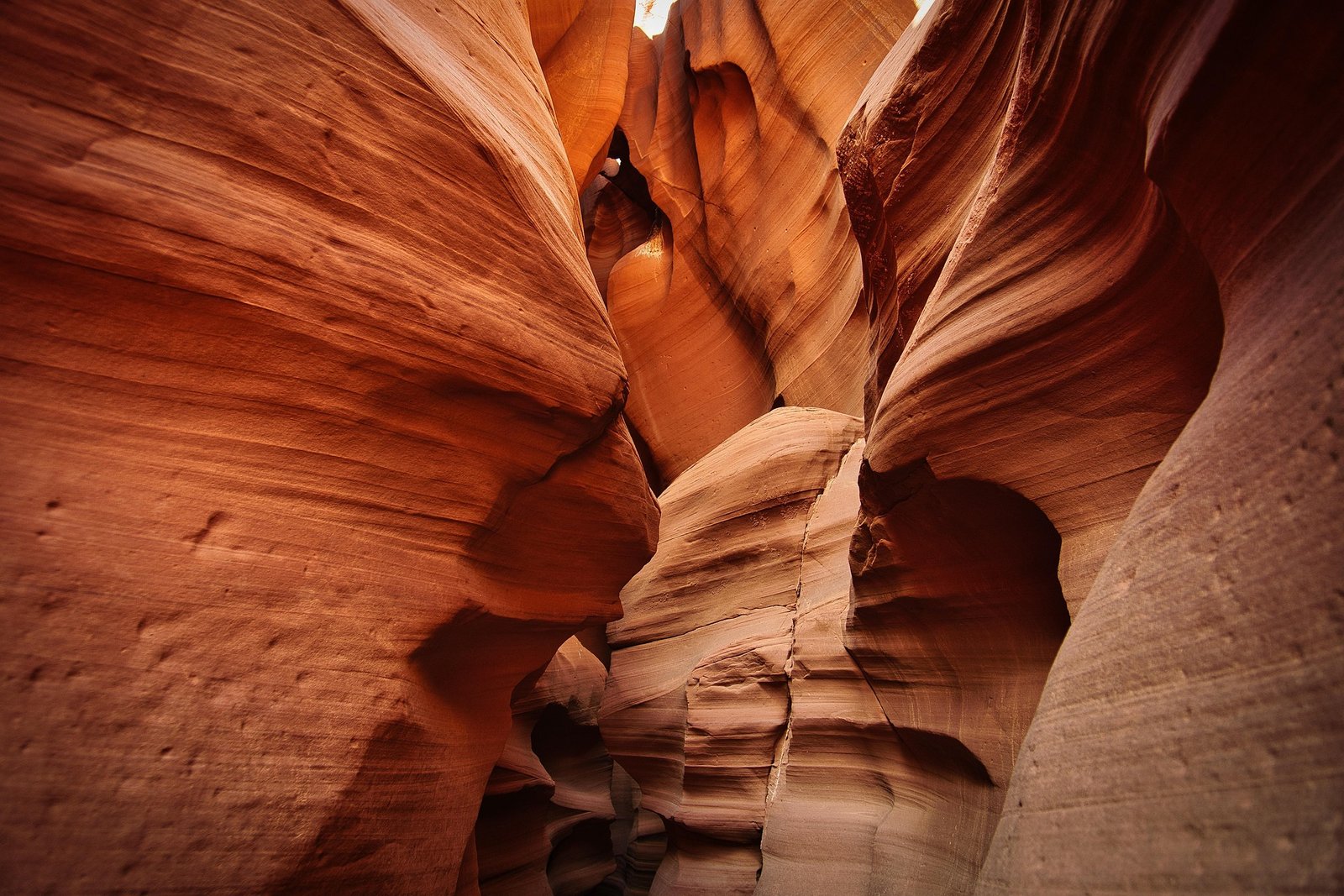
The first time I visited Antelope Canyon, I could hardly believe such a place existed. You descend into the narrow slot canyon, and suddenly light begins to move through the stone like liquid gold. Beams fall from the openings above, illuminating the curved walls in shades of rose and amber. The silence inside is complete. It feels almost sacred.
As the light shifts, the canyon changes color, and you realize you are watching time itself in motion.
In addition, the nearby Horseshoe Bend offers one of the most dramatic views in the Southwest. The Colorado River curves in a perfect horseshoe shape below a sheer cliff, and when the sun sets, the entire canyon glows in fire-red light. Standing there, the wind brushing against your face, you can feel the earth breathing beneath you.
Page also offers a chance to experience the water world of the desert. You can kayak through the canyons of Lake Powell, where towering sandstone walls reflect on the still surface. Each paddle stroke creates ripples that shimmer like glass. Eventually, as the day fades, the colors of the rock soften, and the lake turns into a vast mirror of the sky.
What makes Page unforgettable is this dialogue between elements. The water, the stone, and the sky seem to speak to one another in a language older than words. It is a place that teaches balance — between stillness and motion, light and shadow, presence and absence.
3. Monument Valley: The Timeless Heart of the West
Driving into Monument Valley feels like stepping into a myth you already know. The landscape is so iconic that even if you have never been there, you recognize it instantly. The towering sandstone buttes rise from the desert floor like ancient guardians, and the horizon stretches so far that it seems to curve with the earth.
When I arrived just before dawn, the air was cold and perfectly still. Slowly, the first light began to seep over the mesas, and the world turned gold. Every shadow grew longer, every color more intense, until the desert seemed to pulse with life. For a moment, I understood why the Navajo Nation, who call this land home, see it as sacred.
Moreover, taking the 17-mile Valley Drive allows you to witness the sheer variety of the terrain. The Totem Pole, Merrick Butte, and Elephant Butte rise like sculptures carved by gods. Dust swirls behind each vehicle, catching the light like smoke. Occasionally, you see a horse crossing the horizon, a reminder that the old West is not entirely gone.
In addition, you can join a guided tour led by Navajo locals who share stories that go far beyond geography. They talk about the spirits of the land, about ancestors who walked these paths long before modern travelers arrived. Listening to them, you realize that Monument Valley is not just a place to photograph; it is a living narrative, a conversation between people and earth.
As night falls, the desert reveals its other side. The sky becomes a dome of light, and the silence feels infinite. I remember sitting outside my lodge, wrapped in a blanket, watching the stars until I lost count. It was so quiet that I could hear my own heartbeat. Monument Valley does that — it empties you of noise until all that remains is wonder.
4. Moab, Utah: Red Rocks and Wild Freedom
Crossing from Arizona into Utah, the landscape transforms again. The colors deepen, the air sharpens, and the rocks take on impossible shapes. The town of Moab lies at the heart of this surreal world, framed by two extraordinary national parks: Arches and Canyonlands.
In Arches National Park, nature’s imagination runs wild. More than two thousand natural stone arches rise from the desert, sculpted by wind and time. Walking to Delicate Arch at sunset is one of those moments that imprint themselves on your soul. The light grows soft and golden, the rock glows orange, and the arch itself becomes a window to eternity. Moreover, the silence there feels absolute, broken only by the soft murmur of the wind.
Meanwhile, Canyonlands National Park opens into an endless labyrinth of cliffs and mesas carved by the Colorado River. At Mesa Arch, dawn arrives with astonishing beauty. The first rays of sunlight pour through the arch and light up the canyon below, turning the rock a deep, fiery red. It is one of those sights that make you forget to breathe.
Moab also offers an exhilarating sense of freedom. You can ride a mountain bike across the slickrock trails, float down the river, or simply drive aimlessly along scenic roads that twist through landscapes so vast they make you feel both small and limitless.
Furthermore, the town itself radiates warmth. Cafés buzz with travelers swapping stories, and the air smells of espresso and dust. In the evening, live music spills out onto patios, and everyone gathers under the stars. Moab teaches you that adventure is not about adrenaline; it is about connection — to land, to people, and to the present moment.
5. Zion National Park, Utah: Where Light Becomes a Prayer
Finally, the road leads to Zion National Park, a sanctuary of stone and water that feels almost divine. The canyon walls rise hundreds of meters high, painted in shades of cream, pink, and amber. Rivers carve through the rock like veins of silver, and light filters through the cliffs in narrow beams that shift with every hour.
Hiking the Angels Landing Trail is both exhilarating and humbling. The path climbs sharply, with steep drop-offs and endless views. As you reach the top, the valley opens below in a breathtaking panorama. The wind moves gently, and the sun warms your skin. You feel suspended between earth and sky, utterly alive.
Nevertheless, the heart of Zion is not found only in its heights. The Narrows, where you wade through the Virgin River between towering canyon walls, offers an experience of quiet reflection. The water is cold, the light dances across the surface, and your footsteps echo softly. In those moments, it feels as though time has slowed to a whisper.
Moreover, the park changes constantly. Morning light fills it with serenity, while afternoon brings fire and contrast. Evenings, however, belong entirely to peace. When I watched the last rays disappear behind the cliffs, I realized that Zion is not just a destination. It is a reminder that beauty, in its purest form, asks for nothing but gratitude.
When the journey ends, and you drive away with the windows down, the air of the desert still clinging to your skin, you realize that chasing sunsets here is not about collecting photographs. It is about learning to recognize the light within yourself — the one that flickers quietly, waiting to be reignited by wonder.