Bahia Dreams: Afro-Brazilian Culture, Music, and the Magic of Salvador
In this article you will find…
An exploration of Bahia, Brazil’s most soulful state, where rhythm, spirituality, and joy coexist in perfect harmony. You will wander through the cobblestone streets of Salvador, where drums echo through the alleys and colors seem to breathe. You will taste the fire of Bahian cuisine, feel the pulse of capoeira in your veins, and watch the sun set over beaches that glow like embers.
However, this is not only a travel story. It is a love letter to a place where every heartbeat becomes music. Bahia is not simply a destination; it is a revelation. Its culture was born from resistance and shaped by beauty, and it continues to inspire anyone who lets it in.
Therefore, if you are searching for an experience that connects emotion with movement, Bahia will teach you that to travel is not to escape but to return — to rhythm, to soul, and to yourself.
1. Salvador de Bahia: The City That Dances to Its Own Heartbeat
Your journey begins in Salvador, a city perched above the Atlantic Ocean, where history and music intertwine like the roots of a ceiba tree. As soon as you arrive, you feel the air vibrating. The scent of sea salt, coconut oil, and fried acarajé fills the streets, while the sound of drums rises from the neighborhoods below.
The Pelourinho, the city’s historic center, is a masterpiece of color. Colonial buildings painted in blues, yellows, and pinks stand side by side, their balconies draped with laundry and flags. The cobblestones shimmer in the tropical light, and everywhere you look, life is happening — children playing football, women laughing, and musicians tuning their instruments for the evening ahead.
Moreover, Salvador’s energy comes from its people. The majority of Bahianos are of African descent, descendants of enslaved people who transformed pain into art, oppression into resilience, and silence into song. You can feel that strength in everything, from the rhythm of samba-reggae to the reverence of Candomblé, the Afro-Brazilian religion that honors the orixás, spirits of nature and life.
In addition, visiting a Candomblé ceremony is one of the most profound cultural experiences you can have. Drums fill the air with hypnotic rhythm, women dressed in white spin gracefully, and incense curls toward the ceiling. The energy is electric yet peaceful, and you realize that spirituality here is not separate from daily life — it is woven into it.
As evening arrives, head to Largo do Pelourinho, where live bands perform under the open sky. The music begins softly and builds until the entire square is moving. Strangers join hands, and for a moment, there is no difference between traveler and local. There is only rhythm.
Eventually, when the night deepens and you walk back through the quiet streets, the city hums gently in the background. The moon hangs above the ocean, and you understand that Salvador does not sleep; it dreams.
2. The Flavors of Bahia: Where Food Becomes Celebration
Bahian cuisine is not just food; it is a story of migration, resistance, and invention. Every dish carries a lineage of memory. In the markets of Salvador, women in traditional white dresses sell steaming pots of moqueca, a rich fish stew cooked in coconut milk and dendê oil. The scent alone feels like an invitation.
At Mercado Modelo, the air is thick with spice and sound. Vendors call out over the rhythm of drums, selling everything from handmade jewelry to dried shrimp and baskets of peppers. You sample acarajé, a crispy fritter made from black-eyed peas and fried in red palm oil, filled with shrimp, vatapá, and salad. It is fiery, sweet, and unlike anything else in the world.
Moreover, every meal here feels like a celebration. In Cruz do Pascoal, a small restaurant tucked into a narrow street, you watch the chef stir moqueca slowly, singing softly as she works. She tells you that the secret ingredient is patience. The dish simmers for hours, absorbing the flavors of the sea and the spirit of the cook.
In addition, Bahia’s flavors are rooted in Africa but shaped by the land and sea of Brazil. Coconut, cassava, lime, and chili come together in ways that defy logic but make perfect sense to the palate. You realize that every ingredient has a purpose — to nourish, to comfort, to connect.
Eventually, you take your meal to a terrace overlooking the ocean. The sun lowers, painting the sky in shades of pink and orange. As you eat, a soft breeze carries the distant sound of drums. You pause, close your eyes, and taste the harmony between food, place, and soul.
3. The Call of the Sea: Beaches, Rhythm, and Reflection
Leaving the city behind, the coastline unfolds like a song written in shades of blue. Bahia’s beaches are as diverse as its people. Some are wild and untouched, while others pulse with energy and music.
The most famous is Praia do Porto da Barra, located in the heart of Salvador. Locals and travelers gather here from morning to night, swimming in calm turquoise water and sipping coconut water straight from the shell. The sunsets here are legendary, and when the sun finally disappears, everyone applauds, celebrating the simple perfection of the moment.
Moreover, for those seeking tranquility, head north to Praia do Flamengo or Itapuã, where palm trees sway over golden sand and fishermen mend their nets by hand. The rhythm slows, and you begin to breathe differently.
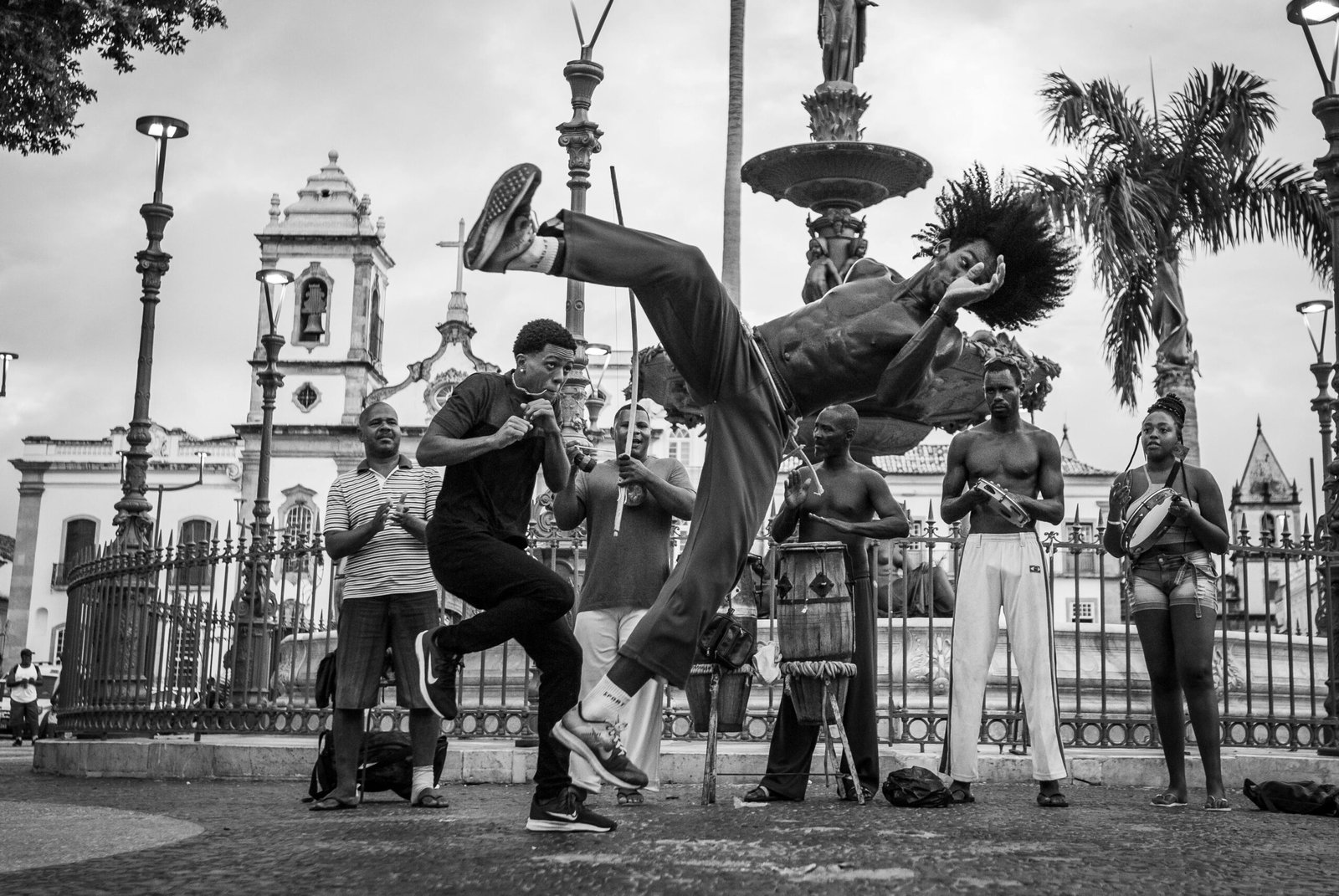
In addition, Bahia’s coastline is not only about relaxation but also about rhythm. On weekends, groups gather for capoeira, the Afro-Brazilian martial art that blends dance, music, and storytelling. The berimbau, a single-string instrument, leads the rhythm while players move in graceful circles, each gesture a dialogue of challenge and respect. Watching it feels like witnessing poetry in motion.
Further south, the road leads to Itacaré, a surf town wrapped in jungle and ocean. The beaches here, like Praia da Ribeira and Itacarezinho, are framed by cliffs and rivers that flow directly into the sea. Surfers ride long, rolling waves, while others find shade in beach bars made of bamboo.
Eventually, as you sit in a hammock watching the horizon, you understand that the sea in Bahia is not just scenery. It is memory, movement, and reflection. It mirrors the rhythm of life — constant, unpredictable, and beautiful.
4. The Heartbeat of Music: From Samba to Axé
To understand Bahia, you must listen. Music here is not entertainment; it is identity. Every rhythm, from samba to axé, carries stories of joy and struggle, love and resistance.
Walking through the streets of Salvador, music seems to follow you. It comes from open windows, church courtyards, and street corners where young drummers practice until their hands are raw. Moreover, every February, during Carnaval, the entire city transforms into a moving ocean of sound. Floats called trios elétricos carry musicians through the streets while thousands dance behind them.
However, Bahia’s music is not limited to spectacle. It is also intimate and spiritual. In small bars of Rio Vermelho, singers perform samba de roda, an older, circular form of samba that dates back to enslaved African communities. The rhythm is slower, deeper, more hypnotic.
In addition, the legacy of Bahian musicians such as Gilberto Gil and Caetano Veloso lives everywhere. Their songs speak of freedom and longing, blending tropical warmth with social reflection. When you hear their voices drifting from a café at dusk, you feel the essence of Bahia — joyful yet thoughtful, proud yet humble.
Eventually, as night deepens, you find yourself in a crowd dancing under the stars. The drums build, voices rise, and you feel your body respond instinctively. You realize that here, dancing is not performance; it is prayer.
5. Afro-Brazilian Spirituality: The Sacred Made Visible
One cannot speak of Bahia without speaking of its spirituality. The region is the cradle of Candomblé, a faith that honors the divine through nature, rhythm, and respect for ancestors. Temples known as terreiros open their doors quietly to those who approach with reverence.
Attending a ceremony feels like stepping into a living mosaic of sound and color. Women dressed in white move gracefully, their skirts swirling like waves. Drums guide the tempo, voices rise in call and response, and incense thickens the air. You can feel the devotion in every movement.
Moreover, the religion’s orixás — deities that embody natural forces — are ever-present in daily life. Yemanjá, goddess of the sea, is celebrated every February with offerings of flowers and perfume that float gently into the water. The beach becomes a temple, and the horizon feels sacred.
In addition, this spirituality extends beyond rituals. It infuses art, language, and gesture. You begin to notice how people greet each other with respect, how music carries intention, how even laughter feels like gratitude.
Eventually, you realize that in Bahia, the boundary between sacred and ordinary does not exist. The divine is in the dance, the song, the meal, and the embrace. Everything breathes the same spirit.
6. Bahia’s Gift: Freedom, Rhythm, and Return
As your journey comes to an end, you sit by the ocean once more. The waves move gently against the shore, and the city glows softly in the distance. You think about everything you have seen — the colors of Pelourinho, the taste of moqueca, the sound of drums, the calm of Itacaré.
Moreover, you realize that Bahia has changed you in subtle but profound ways. It has shown you that joy and depth can coexist, that resilience can sing, and that spirituality can dance.
In addition, Bahia teaches you the true meaning of freedom. It is not about distance or escape; it is about connection. To live freely is to live fully, to open your heart to every rhythm life offers.
Eventually, you understand that Bahia is not a place you leave. It is a song that stays inside you, playing softly even when the journey ends.
When you board your flight and look down at the coastline one last time, you feel the pulse of drums still echoing in your chest. You whisper a quiet promise to return, knowing that part of you already belongs here.