Beyond Beijing: A Journey Through China’s Timeless Heart
In this article you will find…
A journey through Beijing, the soul of China — a city where emperors once ruled and where neon lights now shine over ancient stone. You will walk through the red gates of the Forbidden City, breathe the stillness of the Temple of Heaven, taste dumplings in the hidden alleys of the hutongs, and stand on the Great Wall, feeling both small and infinite. However, this is not a list of places. It is a journey into contrasts, into moments where the past and present fold into each other seamlessly. Therefore, through this story, you will learn that Beijing is not a museum of history nor a futuristic skyline — it is a living organism, constantly reinventing itself, teaching travelers how to move slowly even within a city that never stops.
1. First Impressions: Between Sky and Stone
Beijing is not a city you visit; it is a city that happens to you. The moment you step out of the airport, the air feels different — heavy with history, yet alive with movement. Wide avenues stretch toward horizons that seem to shift with the light. Bicycles glide past luxury cars, and vendors call out from food stalls as digital screens flash advertisements in Mandarin and English. The contrasts are immediate, overwhelming, and beautiful. The first thing that strikes you is scale. Beijing is vast in a way that defies comprehension, yet its heart beats quietly in the narrow lanes and old courtyards tucked between skyscrapers. Moreover, every direction holds a different story. To the north, the imperial palaces whisper of dynasties and dragons. To the east, towers of glass reach upward like modern temples. In between, millions of lives unfold in rhythm — people commuting, cooking, meditating, laughing. The city breathes. In addition, you begin to realize that Beijing’s rhythm is neither slow nor fast; it is steady, ancient, patient. Even its chaos feels deliberate, as though choreographed by centuries of repetition. You walk along Chang’an Avenue, one of the widest roads in the world, where red flags flutter and the smell of roasted chestnuts mixes with the scent of exhaust. You feel both outsider and participant, a witness to something immense. Eventually, as the day fades into the soft light of evening, the city begins to glow. Lanterns light up in doorways, bicycles click past, and somewhere in the distance, a guzheng, the Chinese zither, plays a slow, haunting melody. You stop to listen, realizing that this is Beijing’s true voice — a harmony of stone, smoke, and sound that stretches across centuries.
2. The Forbidden City: Stillness Beneath the Dragon’s Sky
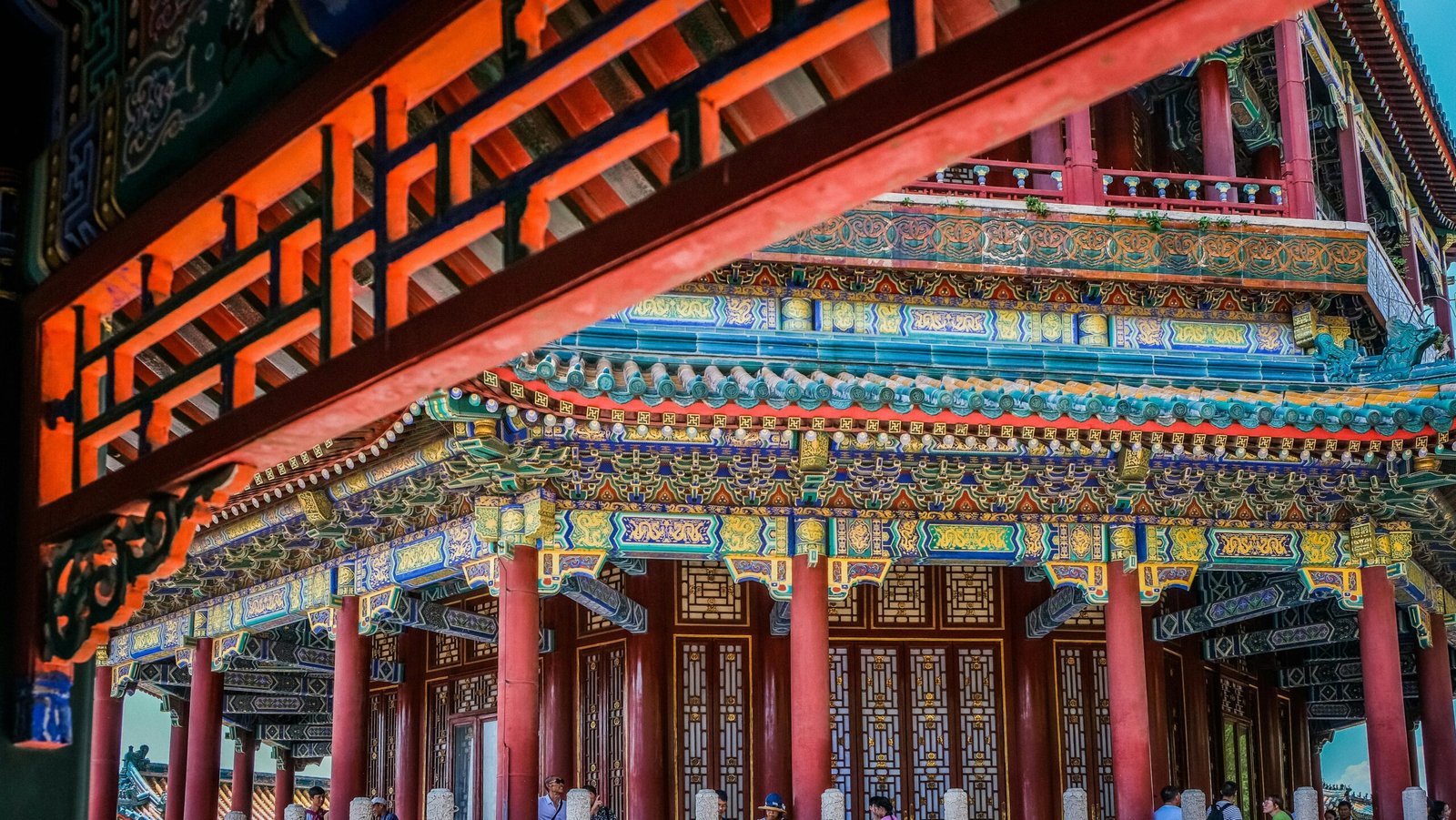
No journey through Beijing can begin without stepping into the Forbidden City, the heart of imperial China and one of the most astonishing architectural creations on earth. The first glimpse of its red walls through the Tian’anmen Gate is unforgettable. The courtyard opens before you like a sea of stone, vast and precise, designed to humble and awe. The air smells faintly of incense and dust, and the sound of footsteps echoes as if the ground itself remembers every emperor who walked here. The Meridian Gate, with its towering arches and golden roofs, welcomes you into another world. The scale is monumental, yet every detail speaks of care: dragons carved into marble staircases, gold-painted beams, doors studded with bronze knobs polished by centuries of touch. Moreover, as you move deeper inside, the noise of the city fades entirely. You step into courtyards where the only sounds are the rustle of trees and the distant call of birds. Time seems to stretch, and for a moment, you forget the world outside. In addition, you notice the geometry of everything — the balance of space and shadow, the harmony between stone and sky. The Forbidden City was not built just to impress; it was designed to align with cosmic order. Every gate, every hall follows the logic of symmetry and the rhythm of the seasons. Standing before the Hall of Supreme Harmony, where emperors once sat on dragon thrones, you feel a mix of awe and quiet respect. The emptiness inside the hall is its power. There are no crowds here in your mind’s eye, only stillness and light. You imagine the whisper of silk robes, the scent of ink, the echo of drums announcing the dawn of a new dynasty. Eventually, as you walk toward the Imperial Garden, with its twisted cypress trees and worn stone paths, you sense that the Forbidden City is not frozen in the past. It lives in every visitor who pauses to listen, in every gust of wind that moves through its gates. It teaches not only grandeur but balance — a reminder that even power once needed silence to survive.
3. Hutongs: The Human Heart of Beijing
Leaving the grand avenues and palaces, you enter another Beijing entirely — one made of whispers, laughter, and the smell of food frying in woks. The hutongs, the city’s ancient alleyways, are where daily life unfolds in its purest form. Narrow lanes stretch between gray brick walls, lined with red doors that open into shared courtyards. Elderly men play chess beneath trees; women hang laundry that flutters like prayer flags; children chase each other past bicycles stacked neatly against the walls. The sound of a radio drifts through an open window. Everything feels ordinary, yet profoundly intimate. Moreover, these neighborhoods hold stories older than most countries. Many hutongs date back to the Yuan Dynasty, and though modern development has replaced some, others survive — protected not by law but by love. You stop at a small teahouse where steam fogs the windows. The owner, a smiling woman in her sixties, pours jasmine tea into tiny porcelain cups and tells you about her family, who has lived in this same house for three generations. Her voice carries the patience of time. In addition, you learn that the architecture of hutongs mirrors the Chinese philosophy of balance. Houses face inward, creating spaces for community rather than isolation. Inside the courtyards, potted plants, birdcages, and laundry coexist effortlessly, forming small sanctuaries amid the city’s rush. Later, as the evening light turns the gray walls golden, the alleys come alive with food stalls. The smell of dumplings, skewered lamb, and roasted chestnuts fills the air. You try jianbing, a savory crepe filled with egg, scallions, and sauce, and it tastes like joy wrapped in warmth. Conversation flows easily here, even with limited words. Smiles and gestures do most of the talking. Eventually, you realize that the hutongs are not a relic of old Beijing — they are its pulse. This is where the city breathes, where culture survives not in monuments but in everyday kindness.
4. The Great Wall: Walking the Spine of the Earth
No photograph can prepare you for the Great Wall of China. It is not simply a monument; it is a movement, a line of stone that seems to connect heaven and earth. The drive from Beijing takes you through rolling hills and villages where farmers still sell peaches and chestnuts by the roadside. As the city fades, silence deepens, and anticipation grows. When you finally see the Wall, it appears like a dragon sleeping across the mountains, its body rising and falling with the land. You begin your walk at Mutianyu, one of the best-preserved sections, surrounded by forest and often wrapped in mist. The stone beneath your feet is smooth from centuries of footsteps. The climb is steep, your breath quickens, and the wind smells of pine and history. Moreover, the view from the top is endless. The wall stretches in both directions, curving over peaks and disappearing into haze. You stand still, overwhelmed by the realization that this structure, visible from space, was built by hand, stone by stone, through centuries of labor and hope. In addition, you imagine the soldiers who once watched from these towers, guarding the empire’s borders under the same sun. Their presence lingers in the silence. You sit for a while on a step, drinking water and watching the clouds move across the sky. The moment feels both vast and intimate. Eventually, as the sun lowers, the mountains turn gold, and shadows fill the valleys. You walk back slowly, each step heavy with awe. The Great Wall teaches humility — the understanding that greatness is built not in haste but in endurance. It whispers that every boundary, no matter how monumental, eventually becomes a path for connection.
5. Temples and Tea: The Art of Stillness
Back in the city, the noise feels softer now, as if you have learned to hear its rhythm. You visit the Temple of Heaven, a circular masterpiece of blue tiles and symmetry, surrounded by ancient cypress trees. Early in the morning, locals gather here to practice tai chi, their movements slow and fluid against the rising sun. The sound of bamboo flutes drifts through the air, mingling with birdsong. You watch, breathing deeply, and feel peace settle in. The temple, once used by emperors to pray for good harvests, now serves as a sanctuary for anyone seeking balance. Moreover, you notice how spirituality here is woven into daily life. There is no separation between sacred and ordinary. The same people who meditate beneath the trees later share laughter over breakfast dumplings. In addition, Beijing’s tea culture embodies this harmony. You visit a small teahouse near Beihai Park, where shelves of clay teapots and ceramic cups line the walls. The tea master moves with the precision of ritual — warming the cups, rinsing the leaves, pouring slowly. The tea itself, green and delicate, tastes of the mountains where it was grown. Conversation flows quietly, without rush. Each sip feels like an act of gratitude. You learn that tea is not about flavor alone but about rhythm — the slowing down, the paying attention. Eventually, as the afternoon light slants through the windows, you realize that Beijing’s greatest gift is not spectacle but presence. It invites you to pause, to notice, to belong.
6. Nightfall Over the Future
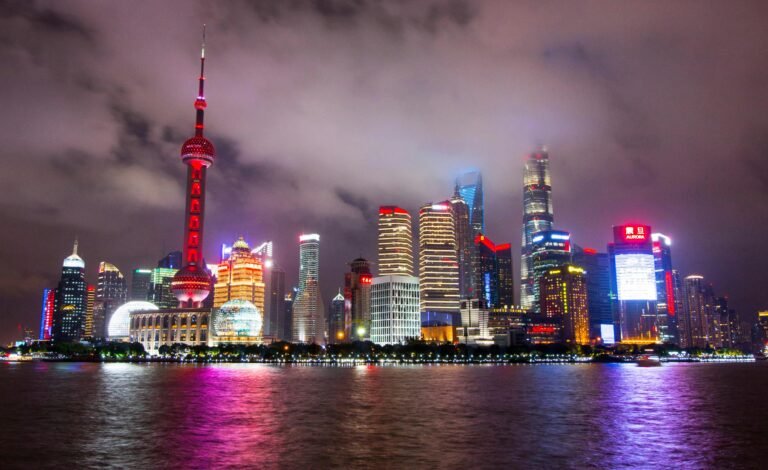
As the final evening falls, Beijing transforms. The Forbidden City glows under golden lights, the Bird’s Nest Stadium shines like a lantern, and the Central Business District rises in glass and steel, its towers reflecting a thousand colors. The city hums with energy — cars streaming like rivers, laughter echoing from rooftop bars, the scent of spices drifting from night markets. You wander through Sanlitun, where neon signs reflect in puddles and street musicians play guitars beneath billboards. The city feels alive in every sense. Moreover, you realize that modern Beijing is not in conflict with its past. It carries it quietly, like a melody beneath the noise. The skyscrapers are new, but the rhythm is ancient — one of resilience, reinvention, and balance. In addition, as you sit at a rooftop bar overlooking the skyline, you sip tea turned cocktail and watch as the lights flicker across the horizon. The night breeze carries a mix of languages, laughter, and music. You think about everything you have seen — emperors’ halls, stone walls, alleyways, and faces that welcomed you with open warmth. Eventually, you understand that Beijing does not need to be understood; it needs to be experienced. It is not just China’s capital; it is its mirror — showing both what was and what is still becoming. You leave with dust on your shoes, tea in your veins, and the calm certainty that you have walked not just through a city, but through centuries.