Buenos Aires Unfiltered: Tango, Passion, and Everyday Magic
In this article you will find…
A journey through Buenos Aires, Argentina’s beating heart — a city where nostalgia dances with rhythm, where mornings begin with the smell of espresso and nights end in music that never stops. You will wander through the cobbled streets of San Telmo, explore the leafy calm of Palermo, and lose yourself in the faded grandeur of Recoleta. You will hear stories in every song, taste emotions in every meal, and feel the pulse of a city that lives not by schedule but by soul. However, this is not a typical city guide. It is an invitation to fall in love with Buenos Aires as it truly is — imperfect, emotional, alive. Therefore, if you travel here not just to see but to feel, you will discover that every street corner holds a small universe waiting to be found.
1. The City of Contrasts: First Impressions of Buenos Aires
Arriving in Buenos Aires feels like entering a dream that was once Paris, then Havana, and finally something entirely its own. As the plane descends, the city stretches endlessly along the Rio de la Plata, its skyline a mix of domes, glass, and history. The air smells faintly of roasted coffee and jacaranda blossoms, depending on the season, and the light carries a warmth that softens even the busiest avenue. The drive from the airport reveals a city layered with contradictions — elegant and chaotic, melancholic and full of laughter. Wide boulevards lead to quiet side streets, old colonial façades stand beside sleek modern towers, and tango music drifts faintly through open windows. Buenos Aires seduces you slowly, not with perfection but with presence. Moreover, you immediately notice that life here happens outside. Cafés spill onto sidewalks; couples share maté on park benches; street performers dance on corners as buses thunder past. The city hums with movement and sound, yet there is an underlying rhythm that feels human, even tender. In addition, Buenos Aires speaks a language of emotion. Locals, known as porteños, communicate with their hands, their eyes, and their hearts. Every conversation feels like a story, and every story feels worth telling. You can sense their pride — not arrogance, but affection — for a city that has survived crisis after crisis and still finds joy in the smallest things. Eventually, as you walk down Avenida de Mayo at sunset, the sky turns copper above the domes, and you understand why travelers often say that Buenos Aires is less a place and more a feeling. It gets under your skin and stays there, like a melody you can’t forget.
2. San Telmo: Where Time Dances in Circles
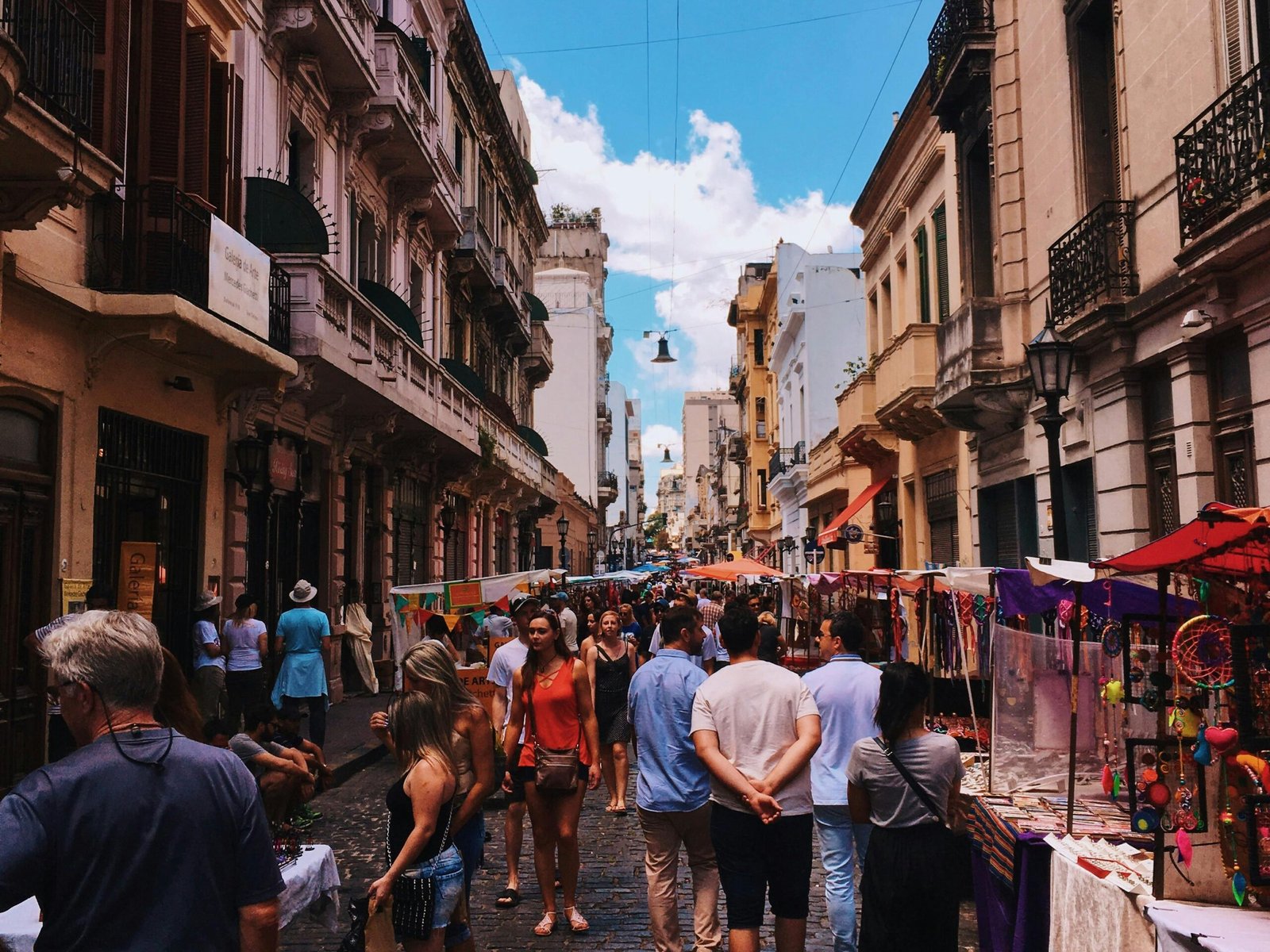
San Telmo is where Buenos Aires began — and where it still remembers itself. The neighborhood is a maze of narrow streets, colonial houses with iron balconies, and antique stores that seem frozen in time. You step onto Defensa Street on a Sunday morning, and the air vibrates with energy. Market stalls fill the sidewalks with leather bags, silver jewelry, and records that still smell faintly of dust and nostalgia. The sound of a bandoneón, the accordion-like instrument of tango, weaves through the chatter, and soon, dancers appear on the cobblestones. They move slowly at first, gazes locked, then faster, their bodies telling stories of longing, loss, and love. You stand and watch, captivated by the intimacy of it all. The dance feels less like performance and more like confession. Moreover, tango was born here — in the margins, among immigrants and dreamers. Its rhythm mirrors the heartbeat of the city: passionate, unpredictable, and full of yearning. To truly understand Buenos Aires, you must let the tango find you. In the evening, you follow the sound of music to a milonga, a local dance hall where people of all ages gather to dance. The lights are dim, the air smells of perfume and wine, and the floor moves in unison, bodies shifting like waves. You watch, sip your drink, and feel the pull. Eventually, someone asks you to dance. At first, you hesitate, then accept. The steps are simple, but the emotion is vast. You move as though learning a language written in touch. Later, you step outside, the night air cool against your skin. The streets of San Telmo glow under the lamps, and you hear laughter drifting from a nearby bar. In addition, you wander toward Plaza Dorrego, where musicians still play, and couples continue to dance long after midnight. It feels like the city itself is breathing through them, alive and infinite.
3. La Boca: Colors, Canvases, and Courage
If San Telmo is memory, then La Boca is emotion. This neighborhood, near the old port, is where Buenos Aires shows its most colorful face — literally. Houses are painted in bright shades of blue, red, yellow, and green, each wall a declaration of resilience and pride. Caminito Street, though crowded with visitors, still pulses with authenticity. Artists paint, children chase soccer balls, and the smell of choripán — grilled sausage on bread — fills the air. You stop to watch an old man painting a small canvas. He tells you that each color represents a story: blue for hope, red for passion, yellow for joy. His hands move quickly, confidently, as if the brush knows more than words ever could. Moreover, La Boca carries the legacy of immigration. It was here that Italian dockworkers built homes from leftover ship materials, using whatever paint they could find. Out of necessity came art, and out of struggle came identity. That spirit remains — proud, defiant, alive. In addition, this is the neighborhood of Boca Juniors, one of the world’s most beloved football clubs. Even if you do not follow the sport, the energy around La Bombonera Stadium is contagious. On match days, the entire district vibrates with chants, drums, and a collective heartbeat that unites everyone. You realize that passion here is not optional; it is the city’s language. Eventually, as the sun sets, you sit at a small café overlooking the river. The paint on the buildings glows warm in the fading light, and tango music drifts softly from a nearby speaker. You sip a glass of Malbec, thinking that perhaps La Boca is the truest expression of Buenos Aires: vibrant, imperfect, and unashamedly human.
4. Palermo: The Art of Modern Life
After the intensity of San Telmo and La Boca, Palermo feels like a deep breath — green, creative, and effortlessly stylish. It is the largest neighborhood in Buenos Aires and also its most eclectic, divided into smaller districts like Palermo Soho, Palermo Hollywood, and Palermo Chico. Each has its own soul, yet together they form a mosaic of what the city is becoming. Morning begins with sunlight filtering through jacaranda trees as you walk to a café. The barista greets you by name after only a day or two, serving rich coffee and medialunas, the sweet croissants that taste of butter and sugar. The pace here is gentle but purposeful, filled with the quiet productivity of artists, writers, and designers who find inspiration in everyday beauty. Moreover, Palermo is a playground for creativity. Murals cover entire buildings, telling stories of love, protest, and change. Boutiques sell handmade jewelry, vintage clothes, and local ceramics. Parks bloom with roses, and dogs chase frisbees across the grass while families share picnics under the sun. In the evening, the neighborhood transforms. Restaurants light up, and the scent of grilled meat fills the air. You dine at Don Julio, one of Buenos Aires’s most celebrated parrillas, where the meat is tender, the wine deep, and the atmosphere joyous. The waiter brings a plate of provoleta, melted cheese sizzling in olive oil, and tells you to eat it before it cools. You laugh, obey, and realize that this city’s hospitality is as generous as its portions. In addition, nightlife in Palermo has a rhythm all its own. Rooftop bars offer panoramic views of the skyline, while hidden speakeasies serve cocktails infused with yerba maté and citrus. The conversations flow easily, the music never too loud, and the feeling of belonging effortless. Eventually, as the night fades into early morning, you stroll home through quiet streets. The air smells of rain and jasmine. You think of how Buenos Aires manages to be both vast and intimate, how even in its largest neighborhoods it always feels close.
5. Recoleta: Elegance, Memory, and Eternity
Recoleta is Buenos Aires in its most graceful form — stately, timeless, and touched with melancholy. Wide avenues lined with jacaranda trees lead to marble facades, French-style mansions, and cafés where waiters still wear pressed shirts and bow ties. The neighborhood exudes old-world charm but remains vibrantly alive. You spend a morning wandering through the Recoleta Cemetery, perhaps the most famous in Latin America, where tombs rise like miniature palaces. It might seem strange to find beauty in such a place, yet there is something deeply moving about the silence here. Cats wander among statues, sunlight filters through iron gates, and flowers rest quietly on cold stone. You stop before Eva Perón’s tomb, simple yet adorned with countless messages of devotion. Her story, like that of the city, is one of passion and resilience. Moreover, just outside the cemetery, life continues with elegant ease. The Plaza Francia hosts weekend markets filled with artisans, music, and laughter. Nearby, the Centro Cultural Recoleta buzzes with exhibitions and performances, proving that even in the shadow of history, creation never stops. You sit at La Biela, a legendary café that has been serving thinkers, writers, and lovers for generations. The espresso is strong, the pastries delicate, and the conversations timeless. You listen to the hum of life around you — the clinking of cups, the rustle of newspapers, the soft cadence of Spanish — and feel as though you have stepped into a novel you once read and never wanted to end. In addition, the art museums nearby, like the Museo Nacional de Bellas Artes, remind you of how Buenos Aires has always seen culture not as luxury but as necessity. The city breathes creativity as naturally as oxygen. Eventually, you stroll toward Avenida Alvear, where bougainvillea climbs the walls and the air smells faintly of perfume. The afternoon light gilds the city in amber, and for a moment, Buenos Aires feels eternal.
6. The Soul of Buenos Aires: Lessons in Living Fully
After days of exploring, you begin to realize that Buenos Aires is not defined by its architecture or its neighborhoods but by its energy — that electric blend of melancholy and joy that pulses through everything. It is in the way people greet strangers as if they were old friends, in the laughter that rises even during difficult times, in the music that fills every silence. Moreover, Buenos Aires teaches that passion is not something reserved for special moments but something woven into daily life. A barista makes coffee as though it were art; a taxi driver sings along to the radio with eyes closed; an old couple dances on a street corner without needing applause. In addition, you start to understand why tango was born here. It is not only a dance but a philosophy — a dialogue between longing and acceptance, between control and surrender. Watching people dance, you see reflections of the city itself: graceful, imperfect, endlessly resilient. Eventually, as you sit in a café one last morning, the smell of freshly baked medialunas mingling with the sound of laughter, you think about what this place has given you. Buenos Aires has shown you that beauty is not tidy, that love can be both fleeting and eternal, and that living fully means embracing contradiction. You close your notebook, pay your bill, and step into the sunlit street. The city hums around you — vibrant, defiant, alive. Somewhere, a bandoneón begins to play. You smile, knowing you will never really leave.