
The Roads of the North: Hokkaido’s Wilderness and Winter Light
In this article you will find…
A journey through Hokkaido, Japan’s vast northern island, where winter light turns mountains into silver and summers explode in endless green. You will taste hot soup curry in Sapporo, stand before the blue miracle of Biei’s pond, and lose yourself among lavender fields in Furano. You will meet fishermen in Otaru, foxes running through snow in Shiretoko, and stars that shine brighter than you ever imagined. However, this is not only a travel story. It is an exploration of silence, resilience, and grace. Therefore, through this article, you will discover that Hokkaido’s true magic lies not in what it offers to see, but in what it invites you to feel — a peace born of open spaces and the humbling beauty of nature untamed.
1. The Arrival: North of Everything
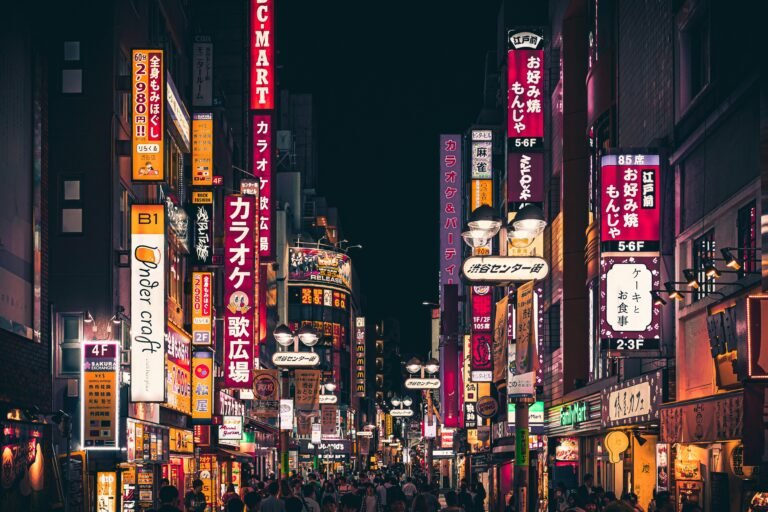
Landing in Sapporo feels like arriving at the edge of the world. The air is colder, the light clearer, and even the silence sounds different. Snow falls softly as the train glides from the airport toward the city, and the landscape outside your window looks like a watercolor painted entirely in white and gray. You wrap your hands around a cup of hot coffee from a vending machine, its warmth seeping slowly into your palms. Every breath feels new. Moreover, Sapporo welcomes you with generosity. Despite being a modern city, it has a warmth that reveals itself in small gestures — a bow from a shopkeeper, the aroma of sweet corn butter ramen rising from a street stall, the laughter of friends gathered in a tiny izakaya to escape the cold. In addition, the city carries a distinct rhythm. Streets are wide, people walk quickly yet without rush, and steam from underground vents mingles with falling snow like smoke from dreams. You stroll through Odori Park, a green ribbon that cuts through the city’s heart, now transformed into a glistening wonderland during the Sapporo Snow Festival. Ice sculptures rise like frozen cathedrals, illuminated in pink and blue lights. Children run, their laughter breaking the stillness, and couples walk hand in hand, their breath visible in the cold air. You sip hot amazake, a sweet rice drink sold from a wooden stall, its warmth spreading through your body. The moment feels both festive and peaceful, a balance only Japan seems to master. Eventually, you find yourself at Susukino, Sapporo’s nightlife district. Neon lights reflect off snow-covered streets, and the smell of grilled seafood fills the air. You stop at a small restaurant serving Hokkaido crab, the meat delicate and sweet, paired with cold sake that burns slightly as it goes down. Outside, the snow keeps falling, silent and relentless. The city feels alive, yet somehow infinite. You realize that Hokkaido begins not with adventure, but with surrender — a letting go of pace, of noise, of everything unnecessary.
2. The Fields of Light: Furano and the Colors of Summer
In summer, Hokkaido transforms completely. The snow melts, the mountains breathe again, and the island bursts into color. You travel south from Sapporo toward Furano, a valley that feels painted by sunlight. The train moves through hills covered in wildflowers, and the scent of lavender drifts through the air long before you arrive. When you step off at Furano Station, the landscape stretches endlessly in all directions — green meadows, purple fields, blue sky. Moreover, the famous Farm Tomita spreads like a patchwork quilt of color. Rows of lavender, poppies, and sunflowers ripple under the breeze. The smell is intoxicating, soft and herbal, like a dream of warmth. Tourists walk quietly among the rows, their cameras clicking softly, but the place never feels crowded. There is too much space, too much beauty for noise. In addition, you stop at a small café overlooking the fields. The air is warm, and the sound of bees mixes with gentle music from inside. You order lavender ice cream, pale purple and perfumed, tasting faintly of honey and summer rain. The woman behind the counter smiles and tells you that every winter, the fields sleep beneath snow two meters deep, waiting patiently for the sun. “Hokkaido always comes back to life,” she says softly. Her words stay with you as you walk further into the countryside. The roads curve between farms and forests, each view more peaceful than the last. Farmers wave from their tractors, children ride bicycles along narrow lanes, and the mountains rise blue and green in the distance. Eventually, you reach a high viewpoint near Nakafurano, where the landscape opens like a painting. The air smells of grass and wild mint. Standing there, you realize that Hokkaido’s power lies in its simplicity — the raw joy of space, the rhythm of seasons, the quiet strength of nature that endures everything and still blooms again.
3. The Blue Dream: Biei and the Silence of Water
Not far from Furano lies Biei, a small town famous for its rolling hills and one of the most surreal sights in Japan: the Blue Pond. The road there winds through forests that seem to breathe. The sunlight filters through tall birch trees, painting moving patterns on the asphalt. When you finally reach the pond, the world around you falls silent. The water glows an impossible shade of turquoise, milky and luminous, as if lit from within. Dead tree trunks rise from its surface like sculptures, their reflections bending in the still water. Moreover, the color changes with the sky. On cloudy days, it deepens to sapphire; in sunlight, it shimmers like liquid glass. You stand quietly, unable to look away. The air is cool and smells faintly of rain. No one speaks above a whisper. It feels like standing inside a secret. In addition, the town of Biei itself is a lesson in subtlety. Its patchwork hills — known as the Patchwork Road and Panorama Road — stretch endlessly, each hill planted with different crops, creating a mosaic of greens and golds. You rent a bicycle and follow the winding paths between farms. The wind moves softly through the wheat, the sound low and rhythmic like breathing. Occasionally, you stop to take a photo, though you know the camera cannot capture the stillness. You meet a farmer repairing a fence, and he waves, smiling shyly. You stop to chat, and though his English is limited, his kindness needs no translation. He offers you a peach from his basket, its sweetness almost floral. The moment is simple, yet unforgettable. Eventually, as the sun begins to set, the hills glow golden, and the sky turns pale pink. You sit by the road, watching shadows lengthen, feeling both small and infinite. Biei teaches you that beauty is not about grandeur but attention — about seeing the world as it quietly is.
4. The Edge of the World: Shiretoko and the Spirit of the North
To reach the Shiretoko Peninsula, you travel for hours — by train, by bus, and finally by road that seems to lead into the clouds. The name Shiretoko means “the end of the earth” in the Ainu language, and it feels exactly that way. The landscape is wild and untouched, where mountains meet the sea and forests stretch endlessly without interruption. You stay in a small lodge near Utoro, the main gateway to the national park. The owner greets you with a bow and a smile, his face weathered by wind and salt. Outside, the air smells of pine and ocean. Moreover, Shiretoko is a UNESCO World Heritage site, celebrated for its raw ecosystems. You take a guided trek through the Shiretoko Five Lakes, a series of crystal pools surrounded by dense forest. The path is quiet except for the rustle of leaves and the distant call of birds. Bears live here, and signs remind you to carry bells to alert them of your presence. The idea of sharing the forest with such creatures feels both humbling and thrilling. In addition, you take a boat tour along the coast, where cliffs rise dramatically from the sea, waterfalls tumbling directly into the waves. Sea eagles circle overhead, and seals rest on icy rocks. The guide points out a fox running along the shoreline, its fur bright against the dark stones. The beauty feels endless, but not soft — it demands respect. Eventually, as evening falls, you soak in an onsen overlooking the sea. The water is hot, the wind cold, and the sun slowly disappears beyond the horizon. The steam rises, the sea shimmers gold, and somewhere in the distance, Fuji’s cousin mountains stand in silent approval. In that moment, you understand the word mujō — impermanence. Everything changes, everything passes, and that is what makes it so beautiful.
5. The Taste of the North: From Sea to Hearth
Hokkaido’s food tells the story of its land — generous, elemental, and comforting. You begin your culinary journey at the Nijo Market in Sapporo, where the smell of the sea fills the narrow lanes. Fishermen call out cheerfully, their stalls overflowing with scallops, sea urchin, salmon roe, and snow crab still moving on ice. You sit at a counter and order a kaisendon, a bowl of rice topped with fresh seafood. The first bite is pure ocean, soft and cold and perfect. Moreover, Hokkaido’s cuisine changes with the seasons. In winter, steaming bowls of miso ramen and soup curry fill restaurants with warmth. In summer, farmers’ markets burst with corn, melons, and dairy so rich it tastes like sunlight. You stop at a small dairy farm outside Niseko, where cows graze on endless fields of green. The owner serves you fresh milk and homemade cheese, simple yet extraordinary. In addition, every small town has its specialty. In Otaru, a port city an hour from Sapporo, you find canals lined with warehouses turned into restaurants. The air smells of soy sauce and caramelized sugar. You order sushi so fresh it almost melts before touching your tongue, paired with sake brewed nearby. The waiter explains that Hokkaido’s cold water gives everything sharper flavor, from fish to vegetables to even beer. Later, in a mountain lodge, you share a meal of grilled venison and potatoes roasted in butter, served with local red wine. The fire crackles, snow falls outside, and conversation flows easily among strangers who have become friends. Eventually, you realize that food here is more than sustenance. It is a conversation between people and the land, a way of saying thank you for survival in a place that demands resilience.
6. The Night Sky: The Silence of Snow
On your last night, you find yourself standing in the middle of an open field near Biei, surrounded by snow. The sky above is a deep blue-black, filled with more stars than you have ever seen. The Milky Way stretches clear across the horizon. Your breath rises in clouds, and the only sound is the faint crunch of snow beneath your boots. Moreover, in that vast silence, you feel an unexpected sense of connection — not loneliness, but belonging. The cold no longer bites; it awakens. You tilt your head back, and the stars seem close enough to touch. Somewhere in the distance, a fox barks once, sharp and clear, then silence returns. In addition, the snow reflects the starlight, making the entire landscape glow faintly. You think of everything you’ve seen — the lavender fields, the blue pond, the frozen sea, the people whose kindness spoke louder than words. Each memory feels alive in this light, shimmering softly like the snowflakes that fall now, slow and gentle. Eventually, you walk back toward your inn. Warm light spills from its windows, and the smell of miso soup drifts through the air. You step inside, take off your boots, and sit by the fire with a cup of hot sake. The warmth spreads through you, and for a moment, everything feels complete. Hokkaido has shown you that wilderness and tenderness are not opposites but partners — that even at the edge of the world, beauty is everywhere, waiting quietly for those who know how to look.