Kyoto Eternal: Temples, Tea, and the Art of Stillness
In this article you will find…
A journey through Kyoto, the spiritual heart of Japan — a city that holds centuries of beauty in every detail, from the curved roofs of its temples to the sound of bamboo swaying in the wind. You will walk through the quiet paths of Arashiyama, stand before the golden reflection of Kinkaku-ji, and learn how to slow your breath during a traditional tea ceremony. However, this is not merely a city guide. It is an exploration of the art of stillness — of how Kyoto teaches travelers to see, to listen, and to feel. Therefore, through this story, you will discover that Kyoto is not just a destination but a meditation in motion.
1. First Glimpse: The Breath of an Ancient City
The train from Tokyo glides into Kyoto Station, and everything feels different the moment you step onto the platform. The air seems softer, filled with the scent of rain and cedar wood. The streets outside are quiet despite the hum of modern life, and the rhythm of the city unfolds slowly, like a haiku written in motion. The contrast with Tokyo is immediate yet harmonious. Here, time feels layered rather than linear. The city breathes in centuries and exhales calm. You notice it in the way bicycles pass gently along narrow lanes, in the bow of an old shopkeeper welcoming you with a wordless smile, in the faint sound of temple bells drifting through the air. Moreover, Kyoto reveals itself not all at once but in fragments — glimpses of beauty that ask for patience. A curtain lifts briefly at a teahouse entrance, showing a woman in a pale kimono preparing matcha. A stone lantern glows faintly in a moss garden. A pagoda appears at the end of a street just as the sun breaks through the clouds. Each moment feels carefully composed, as though the city itself were practicing mindfulness. In addition, Kyoto’s architecture tells its own quiet story. Wooden machiya townhouses, with latticed windows and paper screens, line the streets of Gion and Higashiyama, their beauty understated yet profound. You walk slowly, aware that here, even the smallest detail — the arrangement of pebbles in a doorway, the calligraphy on a shop sign — carries intention. Eventually, you pause at a tiny café serving yuzu tea and listen to the rain tapping gently on bamboo. Kyoto has already begun to speak, and you find yourself answering not with words, but with silence.
2. The Temples of Time: Stone, Light, and Serenity
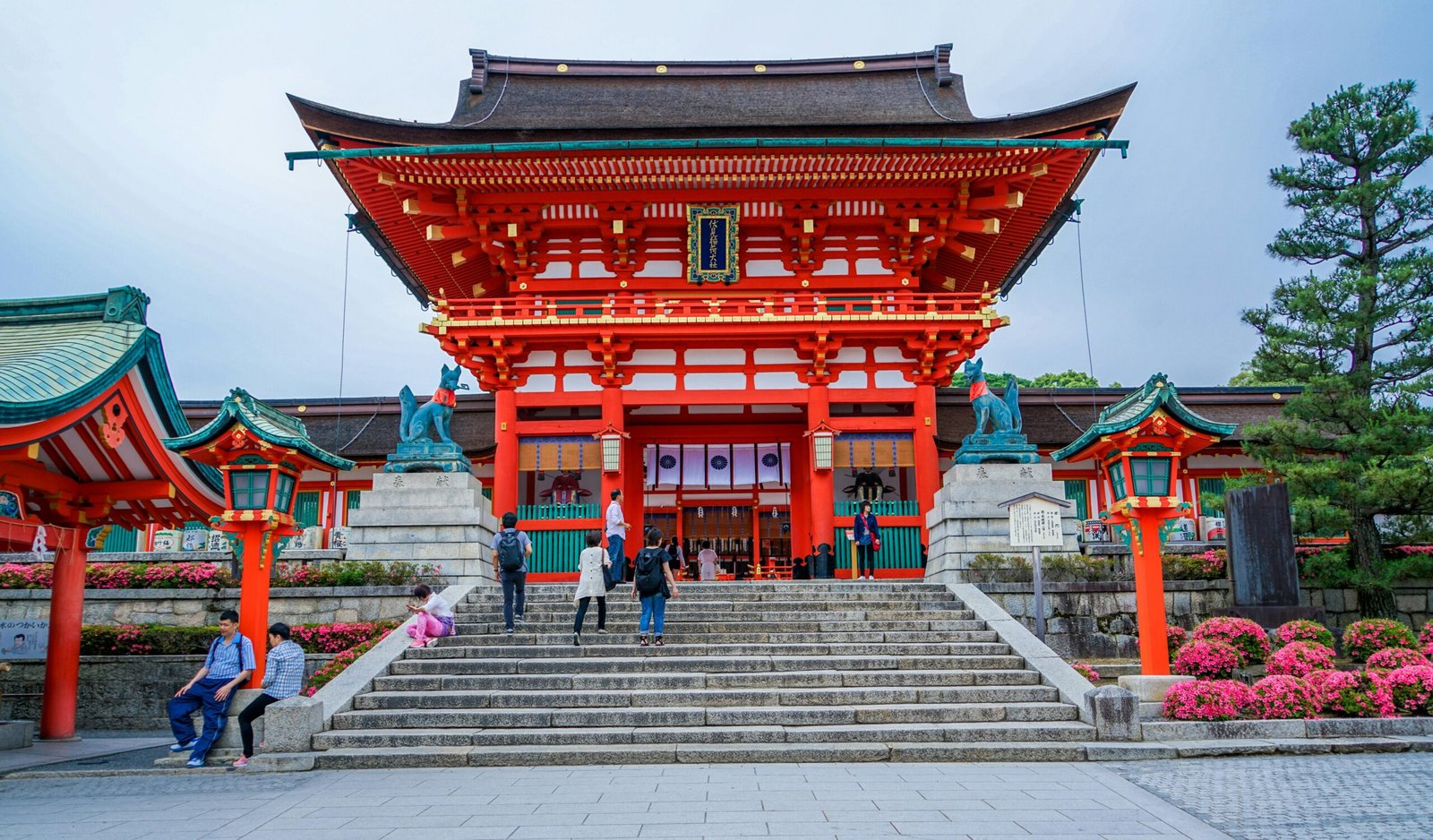
It is said that Kyoto has over 1,600 temples, each with its own voice, its own rhythm. Visiting them is not about counting but about surrendering. You begin with Kinkaku-ji, the Golden Pavilion, whose upper floors shimmer in pure gold leaf above a still pond. The reflection is so perfect that the line between building and water disappears. The air smells of pine and incense, and as you walk around the garden, the world seems to slow until all you hear is the sound of your own footsteps on the gravel. The experience feels both physical and spiritual. Moreover, you visit Ryoan-ji, home to Japan’s most famous rock garden — fifteen stones placed on a bed of white sand raked into waves. From every vantage point, one stone remains hidden, a reminder that perfection exists only in imperfection. You sit on the wooden veranda, watching the shadows shift as clouds move overhead. The pattern in the sand seems to breathe. In addition, at Ginkaku-ji, the Silver Pavilion, moss creeps over the stones like green silk, and the garden feels alive with time. The sound of running water mingles with the whisper of wind in the bamboo. You understand then why the Japanese call this feeling wabi-sabi — the beauty of impermanence, of quiet decay, of harmony between what fades and what endures. Eventually, you make your way to Kiyomizu-dera, perched high above the city. From its wooden terrace, Kyoto stretches out in waves of tiled roofs and maple trees. In autumn, the valley burns red and orange; in spring, it blooms with cherry blossoms. You lean on the railing, the air cool and fragrant, and realize that Kyoto’s temples are not places to visit but to feel — spaces that invite you to pause long enough to notice your own heartbeat.
3. The Gardens: Where Silence Grows
Kyoto’s gardens are poems written in stone, water, and moss. They are not meant to impress but to awaken. You visit Saiho-ji, the Moss Temple, a place so sacred that you must apply in advance to enter. When you arrive, a monk guides you first into a hall where you copy sutras with brush and ink, your hand trembling slightly as you trace the ancient characters. The act feels both humble and intimate — a conversation between you and silence. Only afterward are you invited into the garden. The moss glows in countless shades of green, soft as breath, covering every stone, root, and wall. Small streams glisten between bridges of wood, and the reflection of trees wavers in pools of still water. You walk slowly, aware that each step must be quiet. Moreover, the perfection here lies not in symmetry but in balance. Nothing feels placed; everything feels meant. The garden teaches you to look without seeking. In addition, you visit Tenryu-ji in Arashiyama, where the mountains rise beyond the temple pond like a painted backdrop. The garden was designed to frame the landscape itself, blending man and nature into one composition. The air smells of pine and wet earth, and dragonflies hover above the water like fragments of thought. Later, you sit in Maruyama Park, where families picnic beneath cherry blossoms that fall like snow. The laughter of children mingles with the sound of shamisen strings from a distant teahouse. You realize that Kyoto’s gardens are not places apart from life but part of it — they teach not escape but belonging. Eventually, as the day fades, you return to your guesthouse, your shoes dusted with gravel and your heart quieter than it has been in years.
4. The Tea Ceremony: The Art of Attention
In Kyoto, tea is not just a drink; it is a philosophy. You attend a tea ceremony in a small wooden teahouse hidden behind a garden wall. The host, dressed in a soft gray kimono, greets you with a bow and leads you inside. The room is simple: tatami mats, a single scroll on the wall, a vase with one branch of plum blossom. The light falls softly through the paper screens. Every movement is deliberate — the folding of the cloth, the pouring of the water, the whisking of the matcha until it foams gently at the surface. The sound of the bamboo whisk against the bowl is rhythmic, almost meditative. Moreover, the ceremony follows an unspoken rhythm of harmony, respect, purity, and tranquility — the four principles of chanoyu. You bow before receiving the cup, turning it twice before drinking, so that your lips do not touch its most beautiful side. The tea tastes bitter, smooth, alive. You notice the warmth of the bowl in your hands, the faint scent of charcoal in the air, the silence that feels full rather than empty. In addition, you realize that the ceremony is not about tea but about awareness — of motion, of breath, of connection. Each gesture is a reminder that life’s beauty lies in precision and presence. Later, as you step back into the garden, the air feels different. The leaves seem brighter, the sound of wind softer. The ceremony has slowed your senses until everything around you feels deliberate, sacred, real. Eventually, you understand why Kyoto’s spirit cannot be captured in photographs or words. It must be tasted, one quiet sip at a time.
5. Arashiyama: The Sound of Bamboo and River
To the west of Kyoto lies Arashiyama, a place where nature and spirit meet in perfect harmony. The bamboo grove is the most famous sight, and yet no photograph prepares you for the sensation of walking through it. The stalks rise high above you, swaying gently in the wind, their sound like waves rolling through air. Light filters down in green rays, and the path beneath your feet feels alive. You walk slowly, letting the rhythm of the bamboo guide your steps. Moreover, Arashiyama is more than its grove. The Togetsukyo Bridge, whose name means “Moon Crossing,” spans the Katsura River, reflecting the mountains in its silver curve. From here, you watch boats drifting downstream, their passengers wrapped in blankets, their laughter carried by the wind. The smell of roasted chestnuts fills the air. In addition, you visit Okochi Sanso, a villa once owned by a famous actor, now open as a garden. Its paths lead through groves of maple and camellia, each corner framing a perfect view. At the top, you sip matcha and eat a small sweet made from rice flour and red bean. The balance of flavors mirrors the balance of the landscape — precise, delicate, complete. Eventually, you take a small boat across the river to visit Tenryu-ji, the Temple of the Heavenly Dragon, where water mirrors sky so perfectly that you cannot tell which is which. The mountains rise beyond the temple walls, eternal and serene. You realize that Arashiyama is not a place to see but to feel — a gentle reminder that peace is not found by seeking isolation but by listening to the world as it truly is.
6. Night in Gion: Where Shadows Remember Grace
As evening falls, Kyoto changes its rhythm. The streets of Gion glow softly under the light of lanterns, and the air fills with the faint scent of perfume and rain. You walk along the narrow lanes of Hanami-koji, where wooden teahouses lean close together as if whispering secrets. The sound of your footsteps on the stones echoes faintly. A door slides open, revealing a glimpse of silk and laughter — a geisha, or geiko, stepping gracefully into the night. Her kimono shimmers under the lantern light, and her movements are so fluid that they seem unreal. She passes without a word, leaving behind the quiet rustle of her obi. The moment feels suspended, like a memory belonging to another time. Moreover, Gion teaches you that beauty here is never loud; it is subtle, fleeting, almost shy. The charm lies not in what you see but in what you almost see. In addition, you stop at a small restaurant overlooking the Shirakawa Canal. The water reflects the lanterns, and koi fish glide beneath the surface. Dinner is simple — grilled fish, pickled vegetables, miso soup — yet every flavor feels intentional. The chef moves silently behind the counter, his gestures as precise as those of a tea master. You eat slowly, letting the warmth spread through you. Eventually, as you step outside, the rain begins again, light as silk. The sound on the rooftops becomes music. You walk back through the narrow alleys, each turn revealing another lantern, another reflection, another heartbeat of the city. Kyoto at night feels eternal — a living memory of elegance, humility, and peace.