Nara and the Gentle Deer: Where Japan’s Soul Still Walks
In this article you will find…
A quiet journey through Nara, Japan’s first permanent capital and still one of its most spiritual cities. You will walk among free-roaming deer that bow politely for crackers, stand before the giant Buddha of Todai-ji, and lose yourself in the moss-covered serenity of ancient temples hidden among cedar trees. However, this is not simply a historical itinerary. It is a story about presence — about how, in Nara, time does not move forward but expands. Therefore, through this story, you will discover that Nara is not just a place to visit; it is a reminder of everything sacred that still lives quietly inside the everyday.
1. The Path of Arrival: Where the Sacred Meets the Everyday
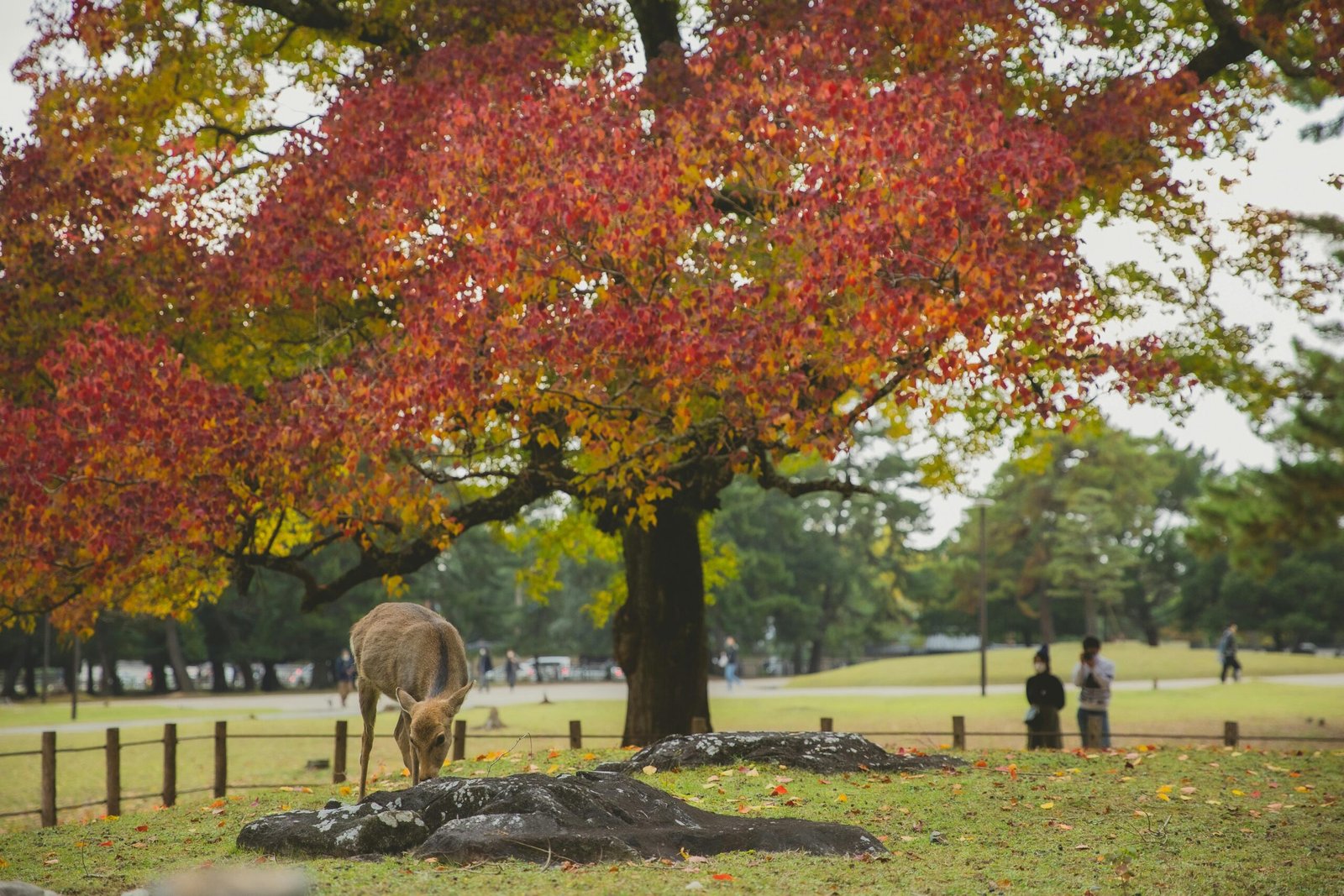
The train from Kyoto to Nara takes less than an hour, yet when you step off at the small station, it feels like you have crossed centuries. The city is smaller, softer, quieter. The air smells faintly of cedar and sweet rice cakes. Bicycles roll lazily down wide streets lined with cherry trees, and elderly couples stroll hand in hand under paper lanterns swaying gently in the wind. There is no rush, only rhythm. Moreover, the first thing you notice is how everything seems infused with calm. Even the modern shops feel respectful, as if they know they stand on sacred ground. You start your walk toward Nara Park, following signs that lead past small shrines and tea stalls. The path rises slightly, and the sound of bells grows closer. Then, suddenly, they appear — the deer. Dozens of them, standing freely beneath the trees, their eyes calm and unafraid. They move slowly, their hooves silent on the stone paths. Locals call them shika, and they are believed to be messengers of the gods. You buy a stack of deer crackers, and one of them bows before you, lowering its head three times with quiet grace. You bow back, unable not to smile. In that moment, you feel the invisible thread that ties humans and nature in this land — not hierarchy, but respect. In addition, the park itself feels like a living temple. The air carries the scent of moss and pine; streams run beneath arched bridges; distant laughter mixes with the faint hum of a flute. Eventually, you reach the Kasuga Taisha Shrine, hidden within the forest. Hundreds of stone lanterns line the path, each one covered in soft green moss. The light filters through the trees in golden beams. The shrine’s vermilion pillars glow against the surrounding shadows. Everything here feels alive with reverence, and you walk slower without realizing it, as though the world had just remembered how to breathe.
2. The Great Buddha: Heart of Stone and Light
From the forest, a wide path leads you toward Todai-ji Temple, perhaps the most famous in Nara and one of the most important in Japan. The temple’s massive wooden gate, Nandaimon, towers above you, guarded by two fierce statues of deities carved in swirling motion. The sound of footsteps on the stones deepens as you cross the threshold. Inside, the air feels charged, still yet powerful. You remove your shoes before entering the main hall, Daibutsuden, the Great Buddha Hall. The building itself is one of the largest wooden structures in the world, reconstructed meticulously after fires centuries ago. When you step inside, light filters through high windows, catching particles of dust that drift like incense smoke. Then you see it — the Daibutsu, the Great Buddha of Nara. Nearly fifteen meters tall, cast in bronze and gold, it sits in perfect stillness, eyes half-closed, palms open in blessing. The sight pulls you into silence. Moreover, you realize that it is not grandeur that moves you but serenity. Despite its size, the statue radiates peace, not power. The air vibrates softly with the sound of chanting monks in a distant corner. Candles flicker like stars in the dim light. Visitors bow their heads, leaving coins, prayers, and quiet tears. In addition, behind the statue, children line up to crawl through a wooden pillar with a hole said to be the same size as the Buddha’s nostril. Tradition says that passing through grants enlightenment in the next life. You laugh softly, watching them wriggle through, their faces glowing with joy. The balance between reverence and play feels perfectly Japanese. Eventually, as you step back outside, the sunlight feels warmer, the sky clearer. You turn once more to look at the temple, its curved roof framed against the green hills. The bronze Buddha seems to linger in your chest, a calm presence that stays long after you leave.
3. The Forest of Lanterns: Kasuga Taisha and the Light of the Gods
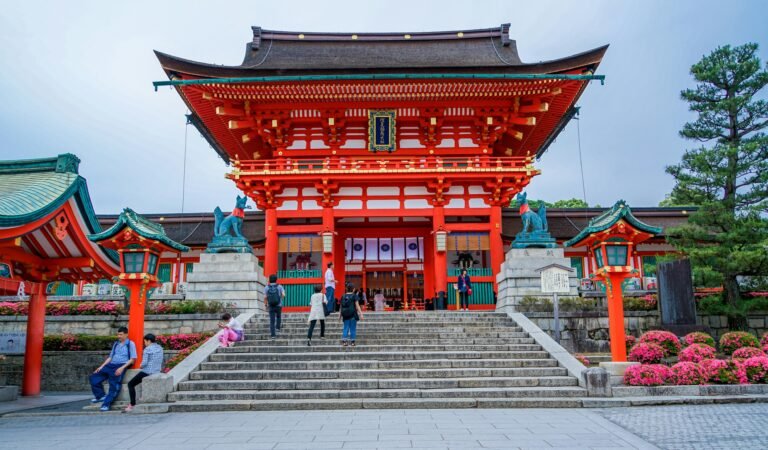
If Todai-ji is Nara’s heart, Kasuga Taisha is its soul. The shrine sits at the end of a long, shaded path that winds through an ancient forest. More than three thousand stone lanterns flank the trail, each one unique, carved by hand, worn smooth by centuries of touch. Moss blankets them in soft green, and ferns grow from their cracks. As you walk, the air smells of cedar, incense, and rain. The only sounds are the call of birds and the crunch of gravel under your shoes. Moreover, the deeper you go, the quieter it becomes, until even your breath feels like part of the forest’s rhythm. The shrine itself appears slowly, glowing in vermilion and gold beneath the trees. Hanging lanterns line its eaves, swaying gently in the breeze. Every February and August, during the Mantoro Lantern Festival, each of these lanterns — stone and metal alike — is lit at dusk. Locals say that when that happens, the boundary between this world and the next grows thin. You can almost imagine it as you stand there, surrounded by thousands of unlit lamps waiting patiently for their moment of flame. In addition, near the shrine entrance, women in white robes offer small amulets of good fortune. You buy one shaped like a deer bell and tie it to a branch nearby. The bell’s soft chime blends with the wind. A monk passes silently, sweeping fallen leaves with a bamboo broom. He pauses to smile at you, nodding slightly, as if recognizing your quiet awe. Eventually, you realize that Kasuga Taisha is more than a place of worship — it is a dialogue between light and shadow, between what is sacred and what is ordinary. Every lantern, every leaf, every step is part of that conversation.
4. Naramachi: The Echo of Old Japan
Leaving the forest, you wander into Naramachi, Nara’s old merchant district, where narrow lanes twist between wooden houses preserved from the Edo period. The contrast with the temples is gentle rather than abrupt. Here, the sacred lives inside the everyday. Small shops sell handmade fans, calligraphy brushes, and sweets wrapped in washi paper. The smell of roasted green tea drifts through open doors. You hear the soft sound of a shamisen playing from somewhere nearby. Moreover, you step into a restored machiya, a traditional townhouse with wooden beams and paper walls. Sunlight filters through bamboo blinds, and the floor creaks softly beneath your feet. In the inner courtyard, koi fish swim lazily in a small pond. The space feels designed not for luxury but for harmony. You understand why the Japanese word ma means both “space” and “pause” — here, emptiness is beauty. In addition, you stop at a small café that serves kakigori, shaved ice flavored with matcha and red bean. The owner, a woman with kind eyes and silver hair, tells you that her family has lived there for five generations. “Nara changes slowly,” she says, smiling. “That’s our blessing.” You nod, tasting the sweetness that melts slowly on your tongue. The afternoon light warms the wooden facades outside, and you wander through the alleys without hurry. Every corner reveals something small but perfect — a bonsai in a pot, a cat sleeping in a doorway, a wind chime singing softly in the heat. Eventually, you reach the Gango-ji Temple, one of Japan’s oldest Buddhist temples, now a quiet sanctuary hidden among houses. Its mossy tiles and leaning pagoda feel humble yet eternal. You sit on the steps and listen to the cicadas. Naramachi teaches you that history is not just something to preserve but something to live inside, quietly, day after day.
5. The Hill and the Sky: Wakakusa and the Eternal Flame
In the late afternoon, you walk toward Mount Wakakusa, a small hill that rises gently behind Nara Park. The path winds through fields where deer graze freely, their silhouettes framed against the golden light. Climbing slowly, you feel the air cool as you ascend. The city falls away below, temples and rooftops glowing like embers in the sunset. From the top, the view stretches endlessly — green hills, distant mountains, and the faint outline of the Great Buddha Hall shining in the distance. The wind moves softly through the grass, carrying the sound of bells from far below. Moreover, Mount Wakakusa holds its own ritual significance. Every January, during the Wakakusa Yamayaki Festival, the entire hillside is set ablaze in a controlled fire meant to purify the land and pray for prosperity. The sight, locals say, is both terrifying and beautiful — the mountain glowing like a torch beneath the night sky. Though you visit in summer, you can almost imagine the flames reflected in the eyes of the crowd, a reminder that destruction and renewal are part of the same cycle. In addition, you sit quietly as the sun sinks, the sky turning from orange to indigo. The deer move slowly past you, unafraid. One stops to look at you for a long moment before disappearing into the trees. The sound of evening crickets rises. Eventually, as the first stars appear, you realize that this hill, like all of Nara, teaches the art of gentle impermanence — of beauty that does not need to last forever to matter.
6. The Night Returns: Reflections of Grace
As night falls, you return to the center of Nara. The air cools, the lanterns along the paths begin to glow, and the deer settle quietly beneath the trees. You walk once more toward the pond near Saruzawa, where the reflections of temples shimmer in the water. The surface moves slowly, disturbed only by the ripple of koi or the soft fall of a leaf. The city feels suspended between worlds — not asleep, not awake, simply existing. Moreover, you notice how sound changes after dark. The laughter of visitors fades, replaced by the steady hum of cicadas and the occasional bell from a distant temple. You sit on a bench with a cup of hot tea bought from a vending machine, its warmth grounding you in the cool air. The taste is simple, slightly bitter, perfectly real. In addition, you think about everything Nara has shown you — how faith and daily life intertwine, how nature and humanity coexist without struggle, how stillness can hold more meaning than movement. The deer, the Buddha, the lanterns, the people — all of them part of the same quiet heartbeat. Eventually, you stand and walk back toward your inn. The streets are empty now except for a few locals returning home. The moonlight falls across the tiled roofs, and for a moment, you see your own reflection in a shop window beside the faint outline of a deer carved into wood. It feels like a farewell, but not an ending. Nara stays with you — not as a memory, but as a rhythm, a way of breathing that will follow you long after you leave.