Shanghai Stories: Lights, Art, and the Future Rising
In this article you will find…
A journey through Shanghai, the shimmering bridge between China’s past and its imagined future. You will wander along The Bund, where colonial architecture watches over a skyline of glass, explore the leafy streets of the French Concession, and taste a city that reinvents itself with every sunrise. However, this is not just a travel itinerary. It is a love letter to a city in constant transformation — where tradition and ambition coexist, and where you can feel history humming beneath the neon. Therefore, as you read, you will discover that Shanghai is more than a metropolis; it is a state of mind, a living rhythm of reinvention.
1. First Impressions: A City That Moves Like Light
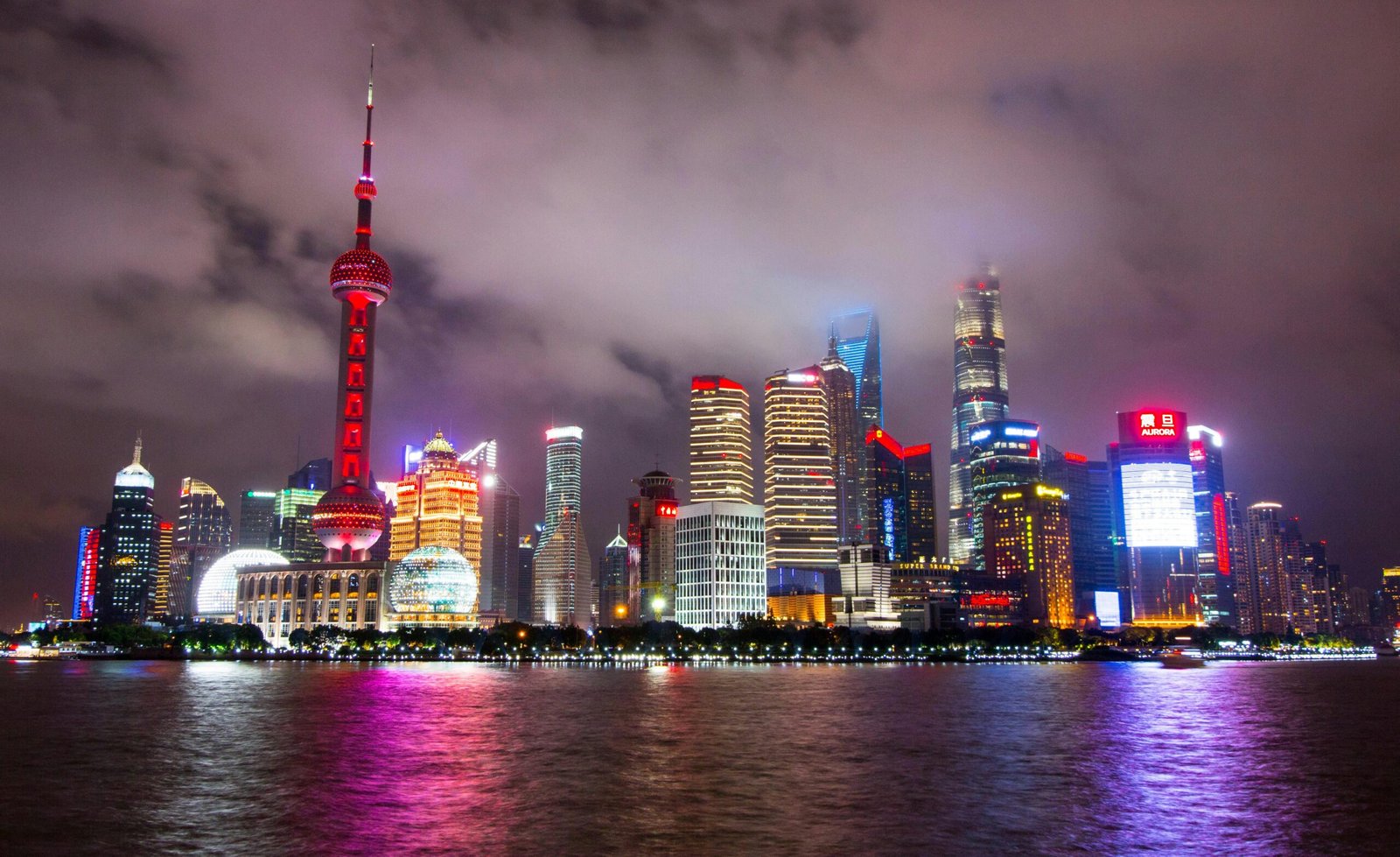
The first thing you notice about Shanghai is movement. The city hums, vibrates, breathes in time with the future. From the moment you step out of Pudong Airport, the air feels electric, charged with possibility. The Maglev train, sleek and silver, glides toward the center at a speed that makes the world outside blur into colors. Yet even as technology whirs, there is grace in the way the city unfolds. Skyscrapers rise like steel calligraphy against the sky, each line deliberate and beautiful. The skyline appears first as an idea, then as a presence — bold, gleaming, alive. Moreover, Shanghai introduces itself not through noise but through energy. Everything seems to move with purpose: the quiet rush of bicycles, the distant honk of taxis, the murmur of countless conversations blending into a single heartbeat. In addition, you feel that here, time doesn’t pass; it races. And yet, beneath the pulse, there is softness. The smell of roasted chestnuts drifts through the air; a grandmother waters her balcony plants above a neon-lit street. The city’s rhythm is both intimate and infinite. Eventually, as night falls and the lights of Pudong flicker to life, you stand by the river, watching the reflections tremble on the water. The Oriental Pearl Tower glows pink and violet, mirrored by the calm surface of the Huangpu River. Across the water, the old facades of The Bund gleam golden, a reminder that before Shanghai dreamed of tomorrow, it was already magnificent yesterday.
2. The Bund: Where History Watches the Future
Standing on The Bund at dusk feels like standing between two centuries. On one side, the colonial buildings — grand, dignified, carved from stone — speak of the city’s past as a global port where East met West. On the other, across the river, the futuristic skyline of Pudong rises in glass and light. It is a view that captures everything Shanghai is: contradiction, ambition, and balance. You walk slowly along the promenade, the river breeze brushing your face. Street photographers snap portraits, couples hold hands, and the scent of street food lingers in the air. The water glimmers beneath bridges lit like jewelry. Moreover, every step feels symbolic. This stretch of river has witnessed everything — opium trade, foreign concessions, revolution, and rebirth. The architecture, from the Peace Hotel to the Customs House, still carries whispers of jazz nights and whispered deals. Yet, it has never stopped evolving. In addition, you cross the river on the ferry to Pudong, and suddenly, the world changes. The skyscrapers loom impossibly tall: Shanghai Tower, twisting toward the clouds; the Jin Mao Tower, elegant and intricate; the World Financial Center, sharp as a blade. The elevator to the top takes less than a minute, and when the doors open, the entire city lies below like a constellation. Roads shine like veins, bridges glow red, and the river snakes through it all like a ribbon of light. You stand in silence, overwhelmed not by the height but by the harmony — the way history and progress coexist without canceling each other out. Eventually, as you descend, you realize that The Bund is not a border between eras; it is a handshake. It is where Shanghai remembers who it was even as it keeps reaching for what it will become.
3. The French Concession: Shade, Style, and Soul
If The Bund is Shanghai’s face, then the French Concession is its heart. The moment you enter this district, everything slows down. The skyscrapers give way to sycamore-lined streets, their branches forming green tunnels that filter the sunlight into gentle gold. The air smells faintly of coffee, magnolia, and old wood. It feels almost European, yet distinctly Chinese — like a melody played in two keys that somehow harmonize perfectly. Moreover, this neighborhood carries an elegance that refuses to fade. Old villas with wrought-iron balconies now house boutiques, art galleries, and tea salons. You wander without hurry, turning corners that reveal cafés where artists sketch by the window, and small courtyards where time seems to pause. In addition, the history of the French Concession is complex. Once an enclave of expatriates, it became a cradle for revolutionaries and intellectuals. The Former Residence of Sun Yat-sen still stands, quiet and dignified, surrounded by trees. You walk through its rooms, imagining conversations that shaped the nation’s modern identity. Later, you stop for lunch at Lost Heaven, where Yunnan-inspired dishes arrive like artwork — fragrant curries, delicate dumplings, and jasmine rice wrapped in lotus leaves. The flavors are rich yet balanced, just like the neighborhood itself. The service is unhurried, the atmosphere serene. Everything invites you to linger. Furthermore, as afternoon fades, you find yourself in Fuxing Park, where locals play cards under the trees and couples practice ballroom dance on open plazas. A man releases small kites into the air, their strings catching the light. You sit on a bench, watching the city breathe. The French Concession teaches that modern life can still have grace — that progress does not have to mean forgetting. Eventually, as evening comes, you wander into a wine bar tucked behind a narrow lane. Jazz hums softly, candles flicker, and the night feels infinite. You take a sip and smile, realizing that Shanghai, like its best wines, is an acquired taste — complex, evolving, impossible to define.
4. Shanghai’s Art and Food: Creativity in Every Corner
Art and cuisine are how Shanghai speaks to the world, and both are alive with imagination. The M50 Art District, built in a former industrial complex, now houses galleries, studios, and street murals. You wander through its narrow lanes, the walls covered with bold colors and abstract dreams. Inside a gallery, a young artist explains her work — installations made of recycled materials inspired by the city’s waste and renewal. Her words echo the city’s own story: constant transformation. Moreover, art here is not confined to walls. It spills into cafés, streets, and fashion. The Shanghai Museum, located in People’s Square, tells the other side of the story — ancient ceramics, bronze sculptures, calligraphy, and jade. The precision of each piece feels almost futuristic in its perfection. Tradition here is not static; it continues to inspire. In addition, Shanghai’s food scene deserves its own love letter. You start with xiaolongbao, the famous soup dumplings that burst with flavor at first bite. Eating them is a ritual: dip gently in vinegar, lift carefully with chopsticks, and savor the warmth that fills your mouth. At Din Tai Fung, the perfection borders on art, but the small local joints hidden in alleys often hold even greater magic. You try shengjianbao, pan-fried buns crisp on the bottom and soft on top, sold by vendors who smile proudly at your delighted expression. Later, you wander into a night market near Yuyuan Bazaar, where lanterns glow and the air smells of sesame oil, roasted duck, and sugar. The crowd is alive — families, lovers, travelers — all united by the joy of taste. Eventually, you sit by the water, eating skewers of grilled squid, watching your reflection shimmer alongside the lights of the city. Shanghai’s creativity is everywhere: in the art, in the food, in the way people reinvent daily life with elegance and courage.
5. The City at Night: Reflections of Infinity
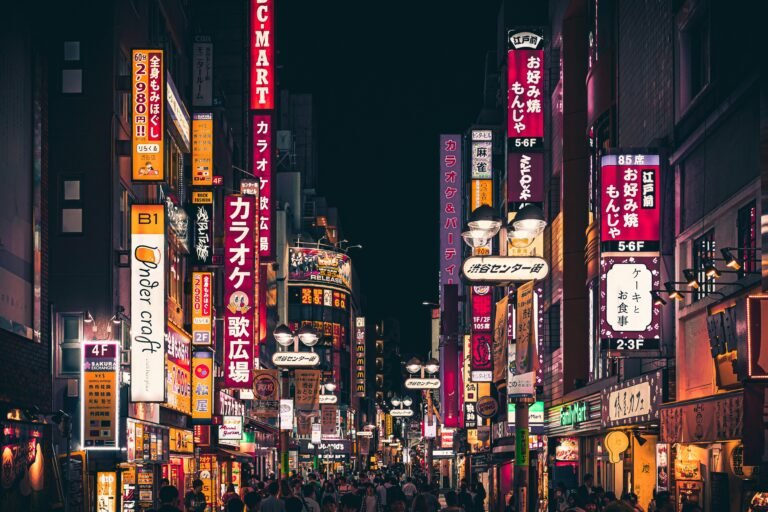
When night descends, Shanghai becomes something else entirely — a city of reflections, of light and motion. You return to The Bund, but now the river glows like liquid glass. The skyline on both sides mirrors itself perfectly, and the line between water and sky disappears. Neon colors ripple across the surface, painting everything in shades of blue, pink, and gold. The air hums with energy but not chaos; it feels like rhythm. Moreover, the sound of laughter rises from rooftop bars, mingling with the music from passing boats. Somewhere nearby, a saxophone plays softly, and the notes drift over the water like silk. You walk slowly, absorbing every detail. The scent of jasmine tea drifts from an open window, and a couple leans against the railing, lost in their own world. In addition, you realize that Shanghai is not just modern — it is emotional. Its lights are not decoration; they are heartbeat. Every window, every reflection tells a story of ambition and tenderness intertwined. Later, you take a taxi to Lujiazui, where the towers gleam like vertical constellations. From the top of the Jin Mao Tower, the city spreads out like a galaxy. Roads pulse with red and white lights, and the horizon glows faintly purple. Time seems to dissolve. Eventually, you return to ground level and walk through Yuyuan Garden, which remains open late for night visits. Lanterns float on ponds, koi fish shimmer beneath the surface, and the architecture glows in gold. The garden, centuries old, feels timeless against the neon beyond its walls. You sit quietly by the water, sipping tea, listening to the faint buzz of cicadas. In that stillness, Shanghai reveals its secret: beneath all its speed and brilliance, it has a soul that craves peace.
6. The Poetry of Tomorrow
On your last morning, the city wakes slowly under pale light. Mist hangs over the river, and the skyscrapers appear softer, almost shy. The sound of street sweepers brushing the pavement mixes with birdsong. You walk once more through People’s Square, where commuters hurry toward the metro and vendors set up for the day. Everything feels ordinary, and yet everything feels extraordinary because you are seeing it differently. Moreover, Shanghai has taught you something subtle — that progress and serenity can coexist. It shows that the future is not cold steel and glass, but connection, creativity, and care. The people here, from artists to chefs to taxi drivers, all carry the same quiet pride. They are building not just a city but a story. In addition, as you drink one last cup of tea in a café near Nanjing Road, you notice a group of elderly women dancing gracefully to music from a small speaker. Their movements are slow and elegant, framed by the city’s endless rise behind them. It feels like a metaphor for everything Shanghai is — tradition dancing with innovation. Eventually, you walk toward the river again, drawn to that final view. The city stretches before you, shimmering in the morning sun. You inhale deeply, tasting the blend of sea air and distant rain. The skyline seems to breathe with you. You realize that no matter where you go next, part of you will always carry Shanghai’s rhythm — that pulse of light, art, and possibility that makes the ordinary divine.