Tokyo Pulse: Between Tradition, Neon, and Endless Dreams
In this article you will find…
A deep dive into Tokyo, a city of infinite contrasts — ancient shrines hidden between skyscrapers, quiet tea houses beside arcades of light, and alleys that smell of soy sauce and rain. You will wander through Shibuya’s chaos, feel the calm of Asakusa’s temples, taste street food in Ueno, and watch the sunset from a rooftop in Shinjuku. However, this is not only a city guide. It is an emotional portrait of movement and meaning — a story about how Tokyo, despite its scale and speed, finds beauty in small moments. Therefore, through this journey, you will discover that Tokyo is not just a metropolis; it is a heartbeat made of millions of stories.
1. Arrival: The First Breath of Energy
The first moment you step into Tokyo, it feels like stepping into the future. The air hums with energy, the skyline stretches endlessly, and the lights shimmer even in daylight. Yet, beneath the surface of this speed, there is a profound sense of order. The train from the airport slides silently into the city, and you notice how everything works — the quiet precision of the commuters, the music that signals each station, the politeness that fills the air. Tokyo moves fast, but never frantically. Moreover, the first thing that strikes you is how alive the city feels. Even a simple street seems like a movie scene — salarymen walking briskly, schoolgirls laughing over bubble tea, an old man feeding pigeons near a vending machine glowing blue in the dusk. The contrast is constant and seamless. In addition, you notice how the city smells — a mix of roasted chestnuts, ocean breeze, and fresh rain. There is something grounding in that scent, as if the city wants you to remember that it’s human, not just machine. Eventually, you find yourself at Shibuya Crossing, the most famous intersection in the world. The light turns green, and suddenly hundreds of people move at once, flowing like a river that knows no boundaries. You stand still for a moment in the center, surrounded by motion, and feel the pulse of Tokyo enter your veins. The noise, the color, the rhythm — everything vibrates, yet it feels strangely calm. You realize that chaos here has choreography.
2. Asakusa: The Whisper of the Past
To understand Tokyo, you must first listen to its oldest voice. Asakusa is where that voice still echoes — in the clack of wooden sandals on stone, in the scent of incense drifting through temple gates. The Senso-ji Temple, built in the 7th century, stands as a guardian of memory. The approach to the temple, Nakamise Street, is lined with shops selling handmade fans, rice crackers, and lucky charms. The air feels heavy with nostalgia and smoke. Moreover, as you step beneath the Kaminarimon Gate, you see the giant red lantern that has become one of Japan’s most iconic symbols. It sways slightly in the breeze, glowing against the gray sky. Pilgrims bow and clap their hands, offering prayers with the rhythm of devotion. You follow their gestures, not out of religion but out of respect. The sound of coins dropping into the offering box mixes with the chant of monks inside. The experience is both intimate and collective. In addition, the temple grounds open onto gardens where koi fish glide lazily beneath stone bridges. Cherry blossoms scatter petals across the surface of the ponds. You sit on a bench, eating taiyaki, a fish-shaped cake filled with red bean paste, and watch the world unfold slowly. A child chases pigeons. A woman in kimono stops to take a photo. The moment feels suspended, as though time has paused to breathe. Eventually, you wander toward the Sumida River, where boats glide under low bridges and the Tokyo Skytree rises in the distance. The reflection of its silver tower shimmers on the water. The old and new exist side by side, neither overshadowing the other. Asakusa teaches you that Tokyo’s soul is not lost in progress; it evolves with it.
3. Shibuya and Shinjuku: Where Dreams Flash in Neon
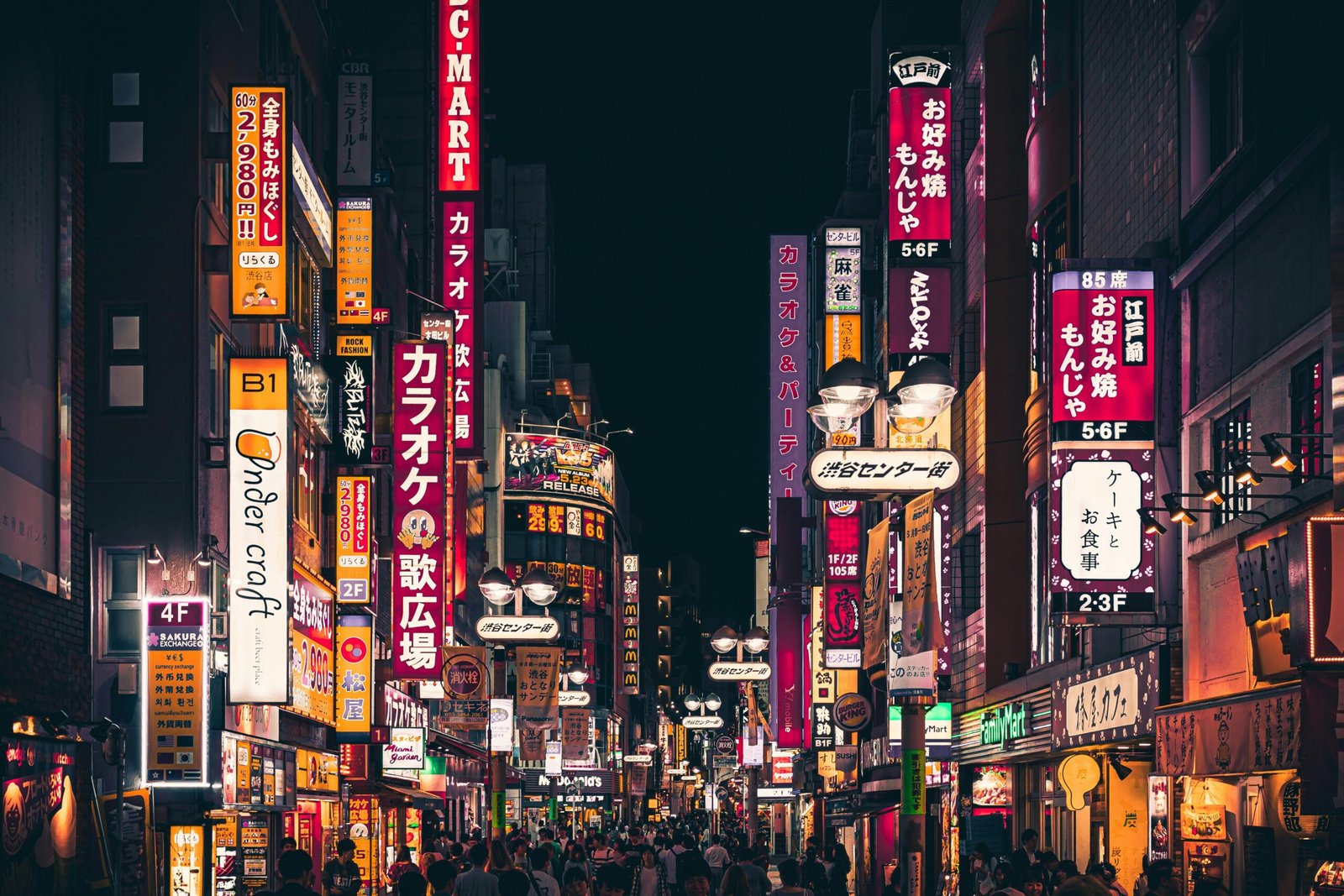
If Asakusa is Tokyo’s past, Shibuya and Shinjuku are its heartbeat. The transition between them feels like shifting from meditation to music. The moment you step out of Shibuya Station, lights surround you in every direction — advertisements, screens, colors that never fade. The famous Hachiko statue stands quietly among the chaos, a small reminder of loyalty and love amid a sea of movement. You take a photo like everyone else, yet somehow it feels different when you’re there — the story of the dog waiting for his owner still lingers in the air. Moreover, as night falls, Shibuya transforms completely. The lights reflect on wet pavement, and people move like currents of color. Music spills from bars, laughter from arcades, and steam from ramen stalls. The smell of broth and soy fills the street. You stop for a bowl at a tiny shop with only eight seats, the chef working in silence behind the counter. The ramen is rich, smoky, perfect. You slurp loudly, as custom demands, and feel warmth spread through your chest. In addition, you wander toward Shinjuku, where the skyscrapers climb higher and the mood deepens. The Tokyo Metropolitan Government Building offers a panoramic view of the city — endless lights stretching to the horizon. From up here, Tokyo looks like a galaxy. Yet, down below, in Omoide Yokocho, the “Memory Lane,” life is small again — narrow alleys filled with smoke, laughter, and tiny bars that seat only six people. You sit beside strangers who soon become friends, sharing grilled yakitori and stories in broken English and gestures. Eventually, as midnight approaches, you walk through Golden Gai, a neighborhood made of tiny bars stacked over each other like boxes of light. The bartender plays old jazz, and outside, the city hums softly. Shibuya and Shinjuku show you that Tokyo’s dream is not in its size, but in the intimacy hidden within its speed.
4. Ueno and Akihabara: Between Art and Electricity
The next day begins with calm in Ueno Park, a vast green heart where Tokyo comes to breathe. The air smells of earth and cherry blossoms, and the paths are lined with families, students, and elderly couples feeding pigeons. The park is home to several museums, but you start with the Tokyo National Museum, where centuries of Japanese art are displayed in perfect quiet. Ancient scrolls, samurai armor, and delicate ceramics speak of a culture that worships precision. You walk slowly, feeling the weight of beauty in every object. Moreover, outside the museum, street performers play flutes while vendors sell sweet dango skewers glazed in syrup. You buy one, the warmth of the rice dumplings comforting against the morning chill. In addition, you walk to the nearby Ueno Zoo, where children laugh as they watch pandas roll lazily in bamboo shade. The sound of joy fills the park. The contrast between serenity and noise feels perfectly natural here. Later, you take the train to Akihabara, Tokyo’s electric soul. The moment you step out of the station, the light hits differently — sharp, fast, futuristic. The air buzzes with the sound of arcades, the flash of LED signs, and the excitement of countless gamers and collectors. Shops spill over with anime figures, gadgets, and neon dreams. You explore floors of manga and vintage electronics, and even if you’re not a gamer, you can’t help but smile. Akihabara represents another kind of spirituality — devotion to passion. Moreover, you realize that Tokyo’s art takes many forms: brushstrokes, pixels, noodles, light. Eventually, you stop at a quiet café hidden on the eighth floor of a building, looking down at the swirl of color below. The contrast is beautiful — inside, silence; outside, electricity. The city is teaching you balance again, in its own dazzling way.
5. The Taste of Tokyo: From Markets to Michelin
Tokyo’s cuisine is a universe in itself. Every meal, from street food to Michelin-starred dining, feels like an act of devotion. You begin your morning at Tsukiji Outer Market, where vendors shout cheerfully and knives flash over slabs of tuna. The smell of the sea fills the air. You taste fresh sashimi served on small plates, each piece melting like snow. The vendors smile proudly, eager to share their craft. Moreover, the market is not only about fish. You try tamago-yaki, a sweet rolled omelet, and uni served over rice. Each bite tells a story of generations who perfected their art through patience. In addition, Tokyo’s food culture extends far beyond markets. You visit a small izakaya in Ebisu, where locals gather after work. The atmosphere is warm, the laughter contagious. You try skewers of chicken hearts, pickled vegetables, and sake that tastes faintly of plum. The host bows as he serves you, his smile genuine and calm. Later, you experience the opposite extreme — a minimalist sushi-ya with only six seats, hidden in a quiet alley. The chef prepares each piece in silence, his movements graceful and deliberate. The sushi is so fresh that it almost glows. He places it before you, and you eat in a moment of perfect focus. There is no decoration, no distraction, only purity. The meal feels less like dining and more like meditation. Eventually, you finish the night at a small bar overlooking the skyline. The bartender stirs your cocktail slowly, his gestures as precise as calligraphy. The lights of the city stretch beyond the window, and you realize that in Tokyo, food is not just nourishment — it is poetry written in taste.
6. The Quiet Corners: Finding Peace in Motion
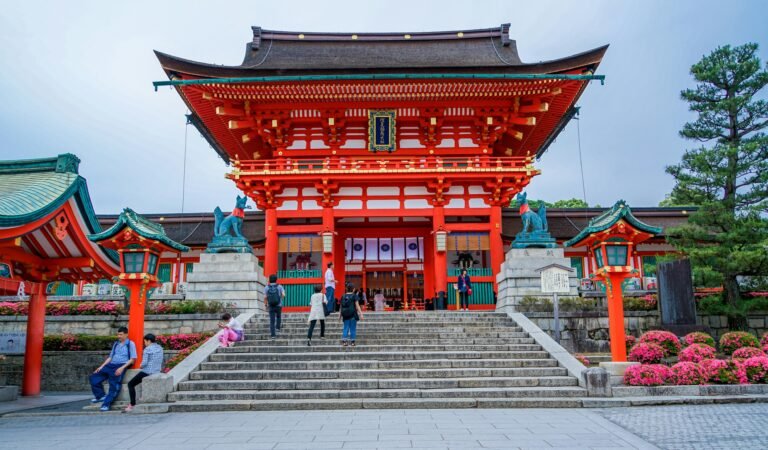
Tokyo is vast, yet it offers countless places of peace for those who seek them. You find one at Meiji Shrine, hidden in a forest in the center of the city. The torii gates rise tall and red among towering cedar trees. The path is long, shaded, and lined with gravel that crunches softly beneath your feet. The sound feels sacred. At the main hall, you bow twice, clap twice, and bow once more, following the Shinto ritual. The act feels simple yet profound. The smell of incense drifts through the air, mixing with the freshness of the forest. Moreover, as you leave the shrine, you pass couples dressed in traditional wedding attire, their white garments glowing in the filtered sunlight. Life continues, quietly sacred. In addition, you visit Yanaka, one of Tokyo’s oldest neighborhoods, where narrow streets curve between wooden houses and tiny temples. Cats wander lazily through alleys, and shopkeepers greet you with soft voices. You stop for coffee in a small shop that feels like someone’s living room. The owner tells you she has lived there all her life, watching the city change but never lose its heart. Eventually, as evening falls, you find yourself back in Shibuya, standing once again at the crossing. The lights flash, the crowd moves, and yet this time you see it differently. You notice the order in the chaos, the kindness in the rush, the beauty in repetition. Tokyo has not slowed, but you have. The city has taught you its rhythm — fast on the surface, still beneath. You take one last look at the neon sky and realize that Tokyo’s pulse will stay inside you long after you leave.